Splinter Cell Series Guide: Sam Fisher’s Games in Order
Every main Splinter Cell game in order, how the series moved from Chaos Theory's pure stealth to Conviction's Mark and Execute, and the remake's status.
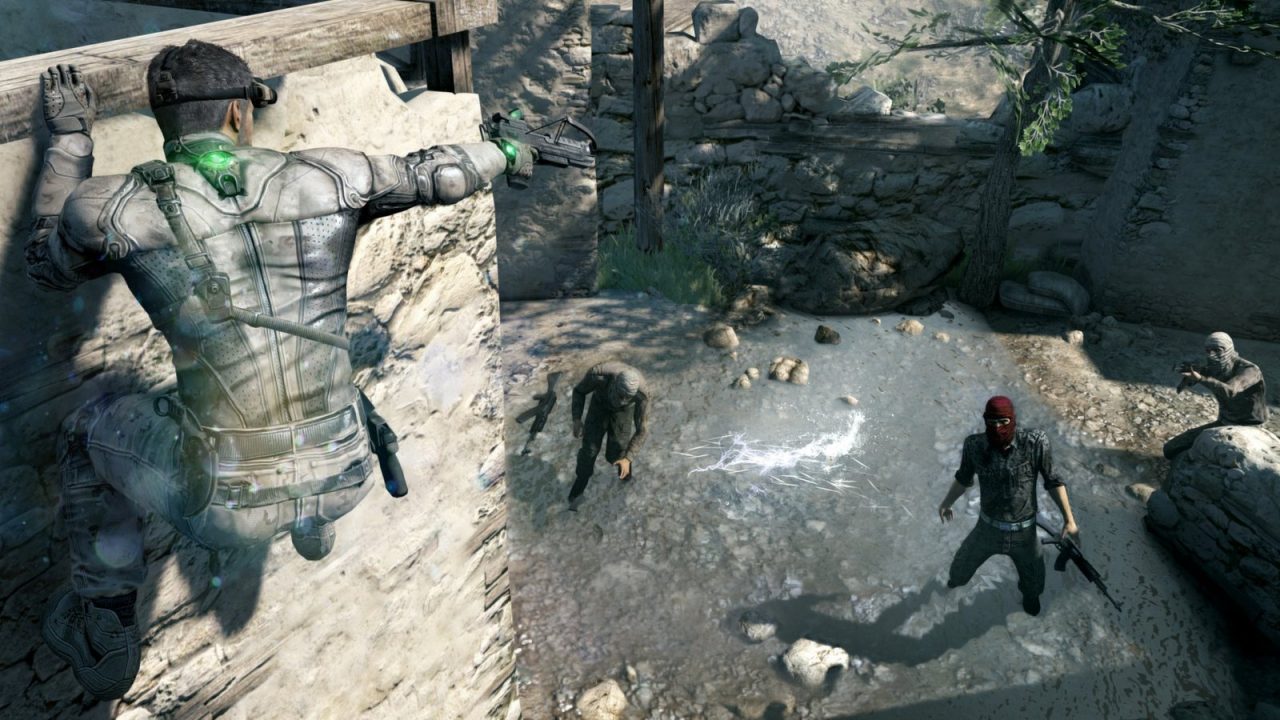
Tom Clancy’s Splinter Cell gave stealth games one of their most recognizable silhouettes: three green lights glowing in the dark. Over six main console games between 2002 and 2013, the series followed Sam Fisher, a veteran operative working for a secret NSA division called Third Echelon, through missions where being seen was usually the first step toward failure. It was built on light and shadow, on gadgets, and on a protagonist whose dry humor balanced the tension.
The series also changed a lot over its run, moving from slow, methodical infiltration to faster “predator” stealth. This guide lays out the games in order, explains how the mechanics evolved, and summarizes where the long-awaited remake stands. The focus is on the single-player campaigns.
The main Splinter Cell games in order
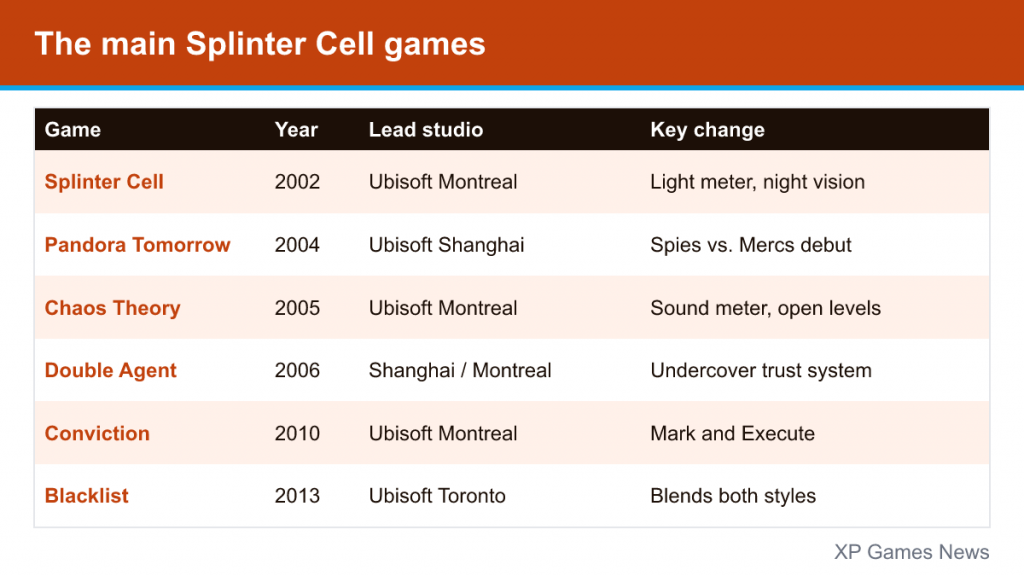
| Game | Release | Lead developer | Key change |
|---|---|---|---|
| Splinter Cell | November 2002 (Xbox) | Ubisoft Montreal | The original: light meter, night vision, Third Echelon |
| Pandora Tomorrow | March 2004 | Ubisoft Shanghai | Refinements and new moves; debut of Spies vs. Mercs |
| Chaos Theory | March 2005 | Ubisoft Montreal | The peak of classic stealth: sound meter, knife, open-ended levels |
| Double Agent | October 2006 | Ubisoft Shanghai / Ubisoft Montreal (different versions) | Undercover story with a trust system |
| Conviction | April 2010 | Ubisoft Montreal | Mark and Execute, Last Known Position, faster action |
| Blacklist | August 2013 | Ubisoft Toronto | Fourth Echelon; blends classic and modern styles |
There was also a PlayStation Portable game, Splinter Cell: Essentials (2006), which explores Sam’s past through flashbacks, plus a handful of handheld and mobile versions. They are not essential to the main story.
The original Splinter Cell was first released on Xbox, with Microsoft publishing that version, and quickly ported to PC, PlayStation 2 and GameCube. Michael Ironside voiced Sam Fisher from the first game through Conviction; in Blacklist, the role went to Eric Johnson, a change many longtime fans noticed.
The classic era: light, shadow and gadgets
The first three games — Splinter Cell, Pandora Tomorrow and Chaos Theory — define what most people mean by “classic” Splinter Cell.
Light as a resource
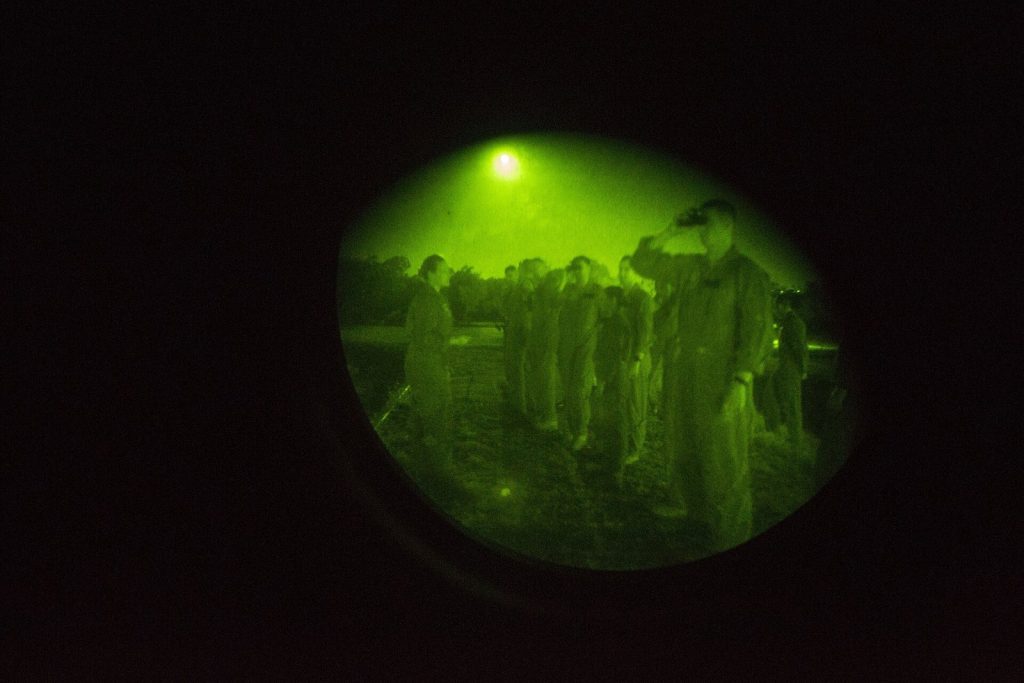
The heart of the early games is a light meter that shows how visible Sam is. Standing in darkness makes him nearly invisible; stepping into light draws attention. You can shoot out lights, switch them off, or use darkness that already exists. Sam’s trademark night-vision and thermal goggles let him see when the guards cannot. This makes every room a puzzle about illumination as much as guard positions. Our explainer on enemy detection in stealth games covers how visibility meters like this one work in general.
Moves and gadgets
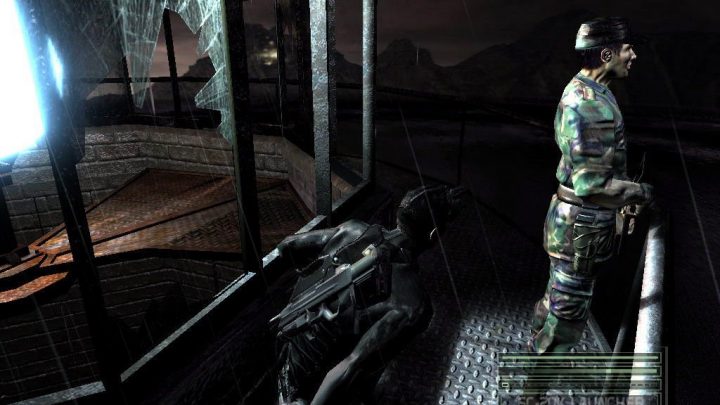
Sam’s movement set was unusually athletic for a stealth game of the time. He could hang from pipes, shimmy along ledges, perform a split jump to brace himself between two walls above a corridor, and grab enemies from behind to interrogate them or use them as shields. His SC-20K rifle carried non-lethal attachments such as sticky cameras, sticky shockers and ring airfoil rounds. Lock picking, optic cables under doors and laser microphones round out a toolkit built around information and avoidance.
Chaos Theory: the high point
Chaos Theory (2005) is widely regarded as the series’ best example of classic stealth. It added a sound meter that compares the noise Sam makes to the ambient noise around him — so walking loudly near a generator can be safe while the same steps in a quiet office give you away. It gave Sam a combat knife for close-quarters takedowns, made levels more open with multiple routes and optional objectives, and allowed you to complete many missions with few or no kills. Its scoring rewarded players who stayed undetected and avoided alarms and casualties.
Chaos Theory also featured a co-op campaign for two players, separate from the main story, and it refined the Spies vs. Mercs multiplayer mode introduced in Pandora Tomorrow — an asymmetric mode pitting third-person spies against first-person mercenaries. That mode is remembered fondly, but it falls outside this single-player guide.
Double Agent: a story about trust
Double Agent (2006) shook up the formula. After a personal tragedy, Sam goes undercover inside a domestic terrorist group, the John Brown’s Army, while still reporting to the NSA. The game tracks your trust with both sides. Objectives often conflict — completing a task for the terrorists may damage the NSA’s trust, and vice versa — and your choices influence how the story ends.
Double Agent is complicated by the fact that it exists in two quite different versions. The current-generation version (Xbox 360, later PS3 and PC) and the older-console version (PS2, original Xbox, GameCube) were developed by different Ubisoft studios and have different level designs and some story differences. If you want to play it today, check which version you are getting.
Conviction: Mark and Execute changes the series
Conviction (2010) was the series’ biggest reinvention. Sam is now a former agent on a personal mission, pursued by his own government. The story is darker and more personal, and the gameplay is faster.
What changed
- Mark and Execute. After a melee takedown, Sam can tag several enemies and shoot them all in a single, fluid action. It turned stealth from avoiding enemies into choosing the right moment to strike.
- Last Known Position. When enemies lose sight of Sam, a silhouette appears where they last saw him. Guards converge on that spot, letting you flank them from somewhere else.
- Visibility shown on screen. Instead of a light meter, the screen drains to black and white when Sam is hidden, so you can read your stealth without looking at a gauge.
- Projected objectives. Mission goals and story clips are projected onto walls of the environment.
- A leaner toolkit. Many classic gadgets and non-lethal options were removed, and the night-vision goggles were replaced by a sonar device later in the game.
Why it divided fans
Conviction is a slick, cinematic game, and many players enjoyed its pace. Longtime fans, though, felt it lost what made the series special: slow observation, ghosting through levels, and non-lethal play. Whether you consider it a natural evolution or a departure, it marks a clear line between classic and modern Splinter Cell — similar to how other long-running stealth series, such as the one in our Metal Gear Solid play-order guide, changed their own formulas across generations.
Blacklist: bridging both styles
Blacklist (2013) puts Sam in charge of Fourth Echelon, a new unit answering directly to the U.S. President, as a terrorist group called The Engineers threatens attacks on American interests unless the country withdraws its troops abroad. Missions are launched from the Paladin, a flying operations base where you upgrade gear and talk to the crew.
Blacklist tried to satisfy both camps:
- Mark and Execute returns, but you can ignore it.
- Non-lethal tools and silent takedowns return in force.
- The game scores your play in three styles — Ghost (undetected, non-lethal), Panther (silent, lethal) and Assault (loud) — and rewards all three.
- A difficulty mode called Perfectionist removes Mark and Execute and makes enemies more perceptive, aimed at players who want a classic experience.
It also brought back the Spies vs. Mercs mode and added co-op missions. For solo players, Blacklist is often considered the best way to experience both the modern and classic sides of the series.
The remake and the series’ current status
Ubisoft announced a remake of the original Splinter Cell in December 2021, with Ubisoft Toronto developing it on the Snowdrop engine. At the time, the studio said it would remain a linear, stealth-focused game rather than an open world. As of October 2026, the remake is still described as in development, with no announced release date or window. Ubisoft made job cuts at the Toronto studio in early 2026 but said development of the Splinter Cell project continues. Until Ubisoft confirms a date, treat any reported timing as unconfirmed.
Outside games, an animated series, Splinter Cell: Deathwatch, premiered on Netflix in October 2025. It continues Sam’s story as an older character but is not a game and is not needed to understand the series.
Where should you start?
The answer depends on what kind of stealth you enjoy.
- For classic stealth: start with Chaos Theory. It is the most refined of the light-and-shadow games and stands on its own well. If you want the story from the beginning, play the original game first, but expect a stricter, older design.
- For modern action-stealth: start with Blacklist. It has the most flexible mechanics and supports both careful and aggressive styles.
- For story completeness: play in release order. Conviction’s and Blacklist’s stories assume you know Sam’s history, especially the events of Double Agent.
A sensible route for newcomers is Chaos Theory, then Conviction, then Blacklist — three games that show the series at its classic peak, its reinvention, and its attempt to combine the two. If you’re curious how Splinter Cell fits into the broader genre, our article on stealth subgenres places it in the light-and-shadow tradition alongside Thief.
What makes Splinter Cell distinctive
Many stealth games ask you to avoid enemies; Splinter Cell asks you to control the environment. Lights, sound, camera networks, doors and ventilation are all tools. The best levels in the series — the lighthouse in Chaos Theory, for instance, or Blacklist’s quieter infiltration missions — reward patient observation more than quick reflexes. Even in its action-heavier entries, the series keeps a tension between information and exposure that makes Sam Fisher’s missions feel like true espionage.
For newcomers, the most important habit is to slow down. Watch patrols, look for darkness, listen to what guards are saying, and use your tools to create the situation you want before you move. That is the core of every Splinter Cell game, from 2002 to Blacklist.