BioShock Series Guide: Rapture, Columbia and How the Games Connect
Every BioShock game explained: Rapture and Columbia, plasmids and vigors, Minerva's Den, Burial at Sea and how the two cities link up.
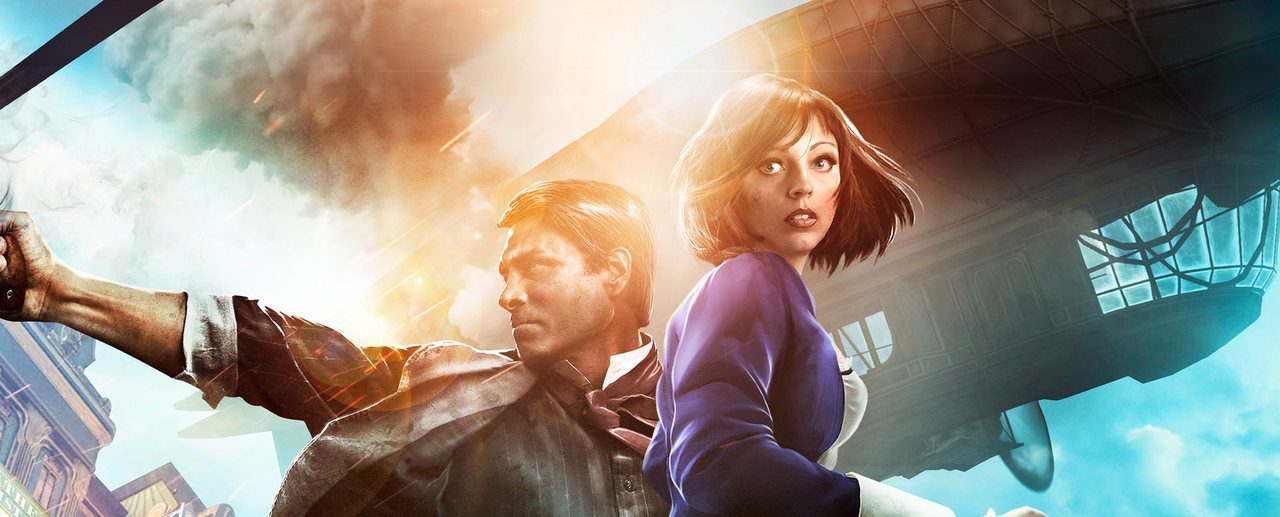
BioShock is a series of story-driven first-person shooters set in impossible cities: Rapture, a failed utopia at the bottom of the Atlantic, and Columbia, a floating city in the clouds. Across three main games and a set of story expansions, it mixed gunplay with superpowers, environmental storytelling and themes about ideology, choice and control. It is also a series whose games connect in ways that are not obvious from the box art — especially once you reach the Burial at Sea expansion.
This guide covers each game’s setting, the core gameplay, the themes, and how everything ties together. The early sections stay at the premise level. Anything that reveals major twists sits inside a clearly marked spoiler section near the end.
The games and who made them
The series was created by Irrational Games, which was known as 2K Boston for part of the first game’s development, with 2K Australia contributing. The second game was handed to a newer studio, 2K Marin, before Irrational returned for Infinite.
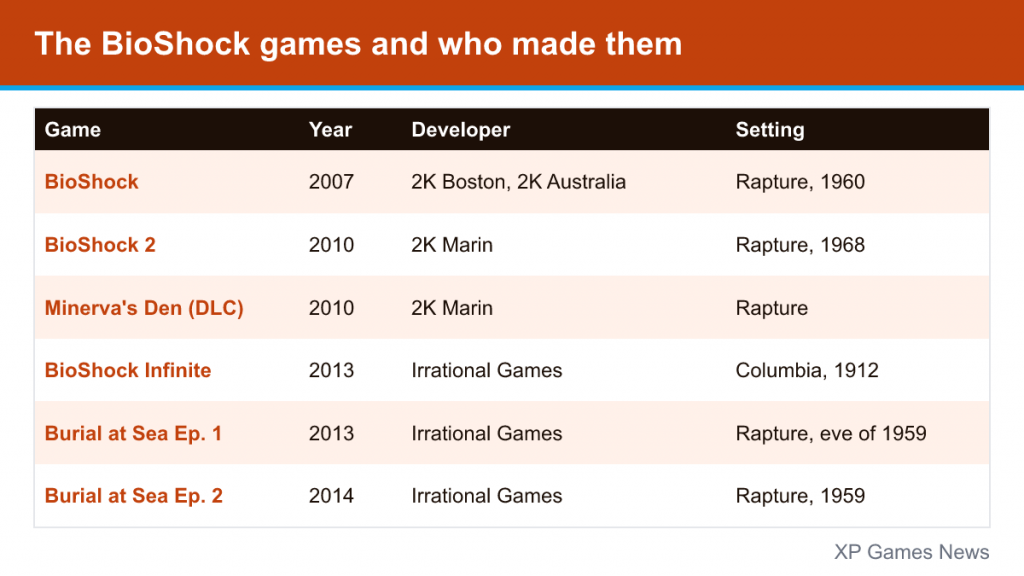
| Game | Release | Developer | Setting |
|---|---|---|---|
| BioShock | August 21, 2007 (North America) | 2K Boston (Irrational Games), 2K Australia | Rapture, 1960 |
| BioShock 2 | February 9, 2010 | 2K Marin | Rapture, 1968 |
| BioShock 2: Minerva’s Den | 2010 (DLC) | 2K Marin | Rapture, during BioShock 2’s timeframe |
| BioShock Infinite | March 26, 2013 | Irrational Games | Columbia, 1912 |
| Burial at Sea – Episode One | November 12, 2013 | Irrational Games | Rapture, on the eve of 1959 |
| Burial at Sea – Episode Two | March 25, 2014 | Irrational Games | Rapture, 1959 |
In 2016, BioShock: The Collection bundled remastered versions of all three games and their single-player DLC for PC, PlayStation 4 and Xbox One, with the remaster work handled by Blind Squirrel Games. A Nintendo Switch version followed in May 2020. For most players today, The Collection is the simplest way to play everything.
BioShock (2007): welcome to Rapture
The first game opens with a plane crash in the mid-Atlantic in 1960. The survivor, a man named Jack, swims to a lonely lighthouse and takes a bathysphere down to Rapture — an underwater city built by industrialist Andrew Ryan as a refuge from government, religion and “parasites.” Rapture was meant to be a paradise for the great and talented. By the time you arrive, it has collapsed into ruin.
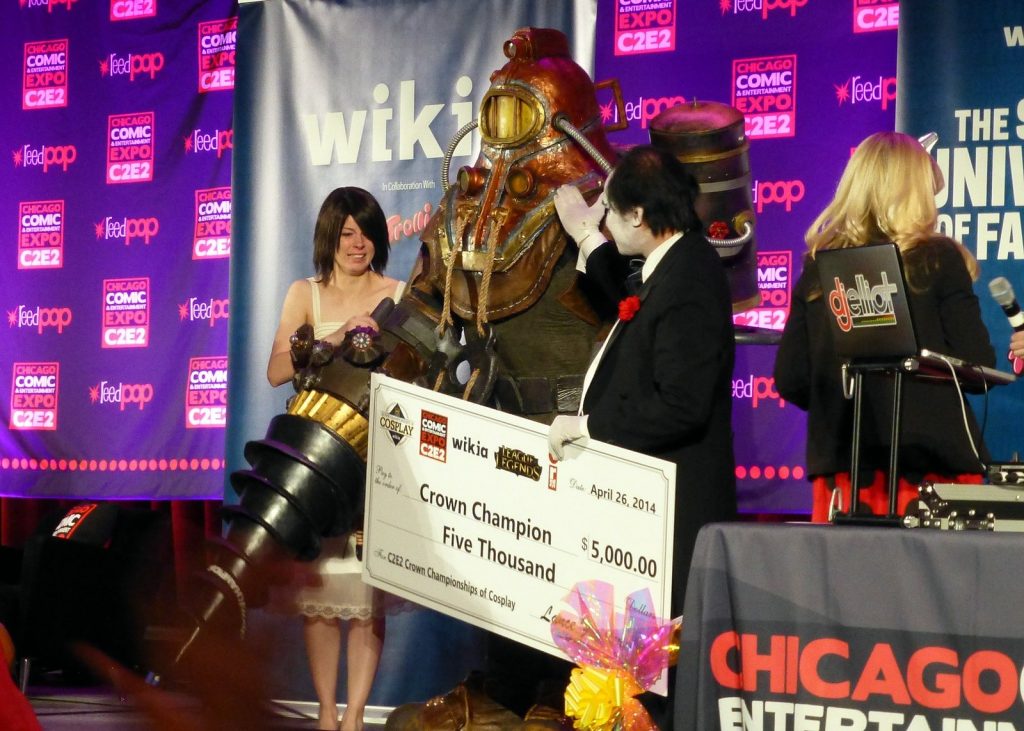
The cause is ADAM, a substance harvested from a sea slug that lets people rewrite their genetic code. ADAM powers plasmids — injectable abilities — but it also drove Rapture’s citizens into addiction and madness. The people you fight, called Splicers, are what remains of the population. A friendly voice on the radio, a man called Atlas, guides you through the city and urges you to help him survive.
How it plays
- Plasmids and weapons in tandem. One hand holds a gun, the other a plasmid such as Electro Bolt, Incinerate or Telekinesis. Plasmids use EVE, a separate resource. Combining them — electrifying enemies standing in water, setting oil slicks alight — is the core of combat.
- Tonics. Passive upgrades slotted into combat, engineering and physical categories.
- Big Daddies and Little Sisters. Little Sisters are girls conditioned to gather ADAM from corpses, each guarded by a hulking diving-suited Big Daddy. Defeating a Big Daddy forces a moral choice: rescue the Little Sister or harvest her for more ADAM. That choice affects the ending you see.
- Research camera and hacking. Photographing enemies grants damage bonuses, and hacking turrets, cameras and vending machines turns Rapture’s systems against its inhabitants.
BioShock was widely praised for its art deco world and for how it delivered story through audio diaries, posters and abandoned spaces rather than long cutscenes — an approach it shares with the series covered in our Half-Life guide.
BioShock 2 (2010) and Minerva’s Den
BioShock 2 returns to Rapture eight years later. You play Subject Delta, one of the first Big Daddy prototypes, searching for Eleanor, the Little Sister he was bonded to. Rapture is now dominated by Sofia Lamb, a psychiatrist whose collectivist philosophy is the counterpoint to Ryan’s individualism.
The gameplay changes are meaningful even if the setting is familiar:
- You can fire weapons and use plasmids at the same time instead of switching between them.
- As a Big Daddy, you carry the Drill and Rivet Gun and can adopt Little Sisters, escorting them while they gather ADAM and defending them from waves of Splicers.
- Big Sisters — fast, agile enemies — act as recurring mini-bosses.
- Short walks on the ocean floor give the city a sense of scale.
Some players feel BioShock 2 is less surprising than the first game, but its combat is often considered the strongest of the Rapture games. Its story DLC, Minerva’s Den, follows another Big Daddy, Subject Sigma, through Rapture’s computing district and a central AI called The Thinker. It is a compact, self-contained story that many fans rank among the series’ best writing; it is included in The Collection.
BioShock 2 originally included a competitive multiplayer mode set during Rapture’s civil war. It is not part of the remastered Collection and is outside the scope of this single-player guide.
BioShock Infinite (2013): Columbia in the clouds
Infinite moves the series from 1960s Rapture to 1912 and the floating city of Columbia, a sky-borne showcase of American exceptionalism that has seceded from the United States. Its leader, Zachary Hale Comstock, is revered as a prophet. You play Booker DeWitt, a former Pinkerton agent sent to retrieve a young woman named Elizabeth, who has been held in a tower for her entire life — with the instruction to “bring us the girl and wipe away the debt.”
Columbia is bright and sunlit where Rapture was dark, but it is just as rotten: the city’s society is built on racism, religious zealotry and exploitation of labor, and those themes drive the story’s revolutionary conflict between Comstock’s Founders and the Vox Populi resistance.
What’s different in Infinite
- Vigors and Salts replace plasmids and EVE. Vigors such as Possession, Devil’s Kiss and Murder of Crows can be thrown or set as traps.
- Two-weapon limit and a recharging shield change the pace of combat toward larger, more mobile fights.
- Skylines and the Sky-Hook. Booker can ride the rail network that links Columbia’s districts, jumping on and off to attack from above.
- Elizabeth as companion. She does not need protecting; she tosses you ammo, health and Salts mid-fight and can open “Tears” — rifts that bring objects like cover, turrets or weapons into the battle from elsewhere.
Themes that run through the series
Each game is built around a powerful ideology and the person who embodies it: Ryan’s objectivist-flavored individualism in BioShock, Lamb’s collectivism in BioShock 2, and Comstock’s theocratic nationalism in Infinite. The games ask what happens when any of those visions is pushed to its extreme, and they tend to show the people at the bottom paying the price.
The other recurring theme is player choice and control. The first BioShock is famous for a twist that comments on how shooters direct players from objective to objective. Infinite expands that into ideas about constants and variables — things that stay the same across every version of a story, and things that change. Lighthouses, cities built on idealism, and a man and a city appear again and again.
A useful way to think about the series: it is less about who is right than about how charismatic leaders exploit people’s hopes. That is why the audio diaries matter so much — they are the voices of ordinary citizens caught up in the leaders’ plans.
Recommended play order
Release order is also the best play order for most people:
- BioShock
- BioShock 2, then Minerva’s Den
- BioShock Infinite
- Burial at Sea – Episode One
- Burial at Sea – Episode Two
If you are short on time, BioShock 2 is the one people most often skip; you can still follow Infinite and Burial at Sea without it. Do not skip the original BioShock, though: Burial at Sea leans heavily on knowing Rapture and its first game’s twist.
Difficulty is worth a quick note. Each game offers several difficulty levels, and Infinite adds an unlockable 1999 Mode that makes resources scarcer and mistakes far more costly. If you are mainly here for the story, normal difficulty is the comfortable choice.
Spoiler zone: how Burial at Sea connects Rapture and Columbia
Major spoiler warning: this section discusses the endings of BioShock and BioShock Infinite and the plot of Burial at Sea.
BioShock Infinite’s ending reveals that its story involves multiple realities — that there are countless lighthouses and cities, and that Booker and Comstock are connected far more closely than they appear. The final scenes briefly visit Rapture, establishing that the two cities exist within the same multiverse.
Burial at Sea builds on that. Episode One places a different Booker and Elizabeth in Rapture on the last night of 1958, before the city fell, in a noir-style detective story. Episode Two switches you to playing Elizabeth herself, with a stealth-focused design that rewards avoiding fights.
The expansion ties the two worlds together through technology: Rapture’s geneticist Yi Suchong and Columbia’s industrialist Jeremiah Fink exchanged knowledge through a tear between cities, which is how the Big Daddies in Rapture and the Songbird in Columbia share a design lineage. Episode Two also connects directly to the first BioShock — Elizabeth’s actions involve Atlas (the alias of conman Frank Fontaine) and help set in motion the circumstances that bring Jack to Rapture. In effect, the final DLC closes a loop that started in 2007.
What came next for the series
Irrational Games was dramatically downsized in 2014 after Infinite’s DLC. 2K formed a new studio, Cloud Chamber, in 2019 to develop the next BioShock. As of mid-2026, that game has no announced title, setting or release date; publisher Take-Two confirmed layoffs at the studio and a longer development timeline in 2025. Anything beyond that — setting rumors, leaked footage — should be treated as unconfirmed until 2K shows the game officially.
In the meantime, the trilogy holds up well. Its shooting is less precise than modern arena shooters such as those in our Doom series guide, but its worlds, audio diaries and twists remain among the most discussed in single-player shooters.