
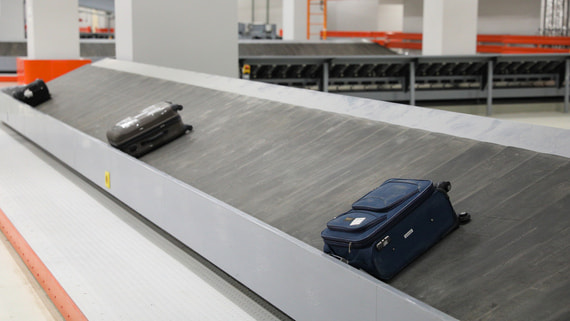
The aviation industry is preparing for a significant technological transformation as airports worldwide explore the deployment of autonomous drones for baggage transportation. This innovative approach aims to dramatically increase labor productivity and accelerate the processing of passenger luggage, addressing one of the most persistent challenges in modern air travel. As airports continue to struggle with staffing shortages and growing passenger volumes, drone technology emerges as a promising solution that could fundamentally reshape ground handling operations.
The concept of using unmanned aerial vehicles for baggage handling represents a natural evolution in airport automation efforts that have been underway for decades. Traditional baggage handling systems rely heavily on conveyor belts, motorized carts, and human workers to move luggage from check-in counters to aircraft and back. This process has long been a bottleneck in airport operations, with delays in baggage handling contributing significantly to flight departures falling behind schedule and passenger dissatisfaction.
The Technology Behind Airborne Luggage Transport
Modern cargo drones designed for airport operations utilize advanced navigation systems, including GPS, LiDAR sensors, and computer vision technology to safely maneuver through complex airport environments. These unmanned vehicles can carry individual suitcases or multiple pieces of luggage simultaneously, depending on their design specifications. The drones are programmed to follow predetermined flight paths between terminals, sorting facilities, and aircraft, avoiding obstacles and other traffic in real-time.
Industry experts suggest that drone-based baggage systems could reduce transfer times by up to 40 percent compared to conventional methods. The technology also promises to minimize the physical strain on airport workers, who currently must lift and move thousands of heavy bags during each shift. According to aviation safety statistics, baggage handling remains one of the most physically demanding jobs in the industry, with workers frequently experiencing back injuries and repetitive strain conditions.
Global Aviation Industry Embraces Innovation
Several major international airports have already begun pilot programs to test drone delivery systems for various applications. Singapore’s Changi Airport, consistently ranked among the world’s best, has experimented with autonomous vehicles and drones for cargo movement within its facilities. Similarly, airports in the Netherlands, United Arab Emirates, and Japan have invested in research and development programs exploring unmanned logistics solutions.
The push toward drone adoption comes at a critical time for the aviation sector. Following the COVID-19 pandemic, many airports experienced severe staffing shortages as workers left the industry and have been slow to return. This labor crisis exposed vulnerabilities in traditional baggage handling operations and accelerated interest in automation technologies. Airport authorities recognize that sustainable solutions must combine human expertise with technological innovation to meet growing demand.
Challenges and Regulatory Considerations
Despite the promising outlook, significant obstacles remain before drone baggage delivery becomes commonplace. Safety regulations governing drone operations in airport environments are still being developed by aviation authorities worldwide. The proximity to active runways and the presence of manned aircraft create unique challenges that require careful coordination and robust fail-safe mechanisms. Additionally, airports must address concerns about noise levels, battery life, and the potential for technical malfunctions that could disrupt operations.
Investment costs also present a considerable barrier for many airports, particularly smaller regional facilities with limited budgets. However, proponents argue that the long-term savings in labor costs, improved efficiency, and reduced injury claims will eventually offset the initial capital expenditure. As the technology matures and becomes more widely adopted, economies of scale are expected to make drone systems increasingly affordable for airports of all sizes.
Expert Opinion: The integration of drone technology into airport baggage handling represents a paradigm shift that will likely become standard practice within the next decade. As regulatory frameworks mature and technology costs decrease, we can expect early adopters to gain significant competitive advantages in passenger satisfaction and operational efficiency. However, the most successful implementations will be those that view drones as complementary to human workers rather than complete replacements, creating hybrid systems that leverage the strengths of both.