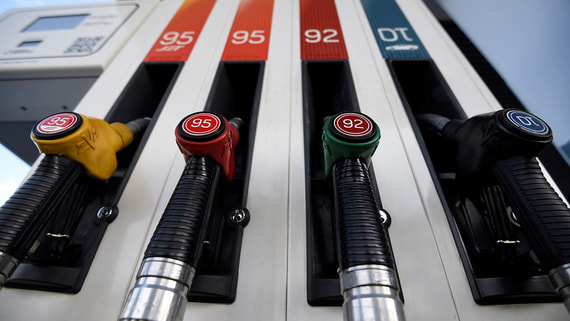
As fuel prices continue their upward trajectory in Russia, economists are closely monitoring the ripple effects throughout the broader economy. The rising cost of gasoline, a fundamental input for transportation and logistics, is poised to trigger a cascade of price increases across multiple sectors. According to leading economic analysts, while direct impacts on consumer wallets at the pump are already visible, the more significant indirect effects of fuel price increases are expected to begin manifesting in July, potentially accelerating overall inflation rates.
The relationship between fuel costs and general price levels has long been recognized as one of the most reliable transmission mechanisms in inflationary dynamics. When gasoline prices rise, the effects extend far beyond what drivers pay at service stations. Transportation costs increase for virtually all goods, from agricultural products to manufactured items, creating upward pressure on retail prices throughout the supply chain. This phenomenon, often referred to as cost-push inflation, can be particularly persistent once it takes hold in an economy.
The Mechanism of Fuel-Driven Inflation
Understanding how gasoline prices influence broader inflation requires examining the complex web of economic relationships that connect energy costs to consumer goods. In modern economies, virtually every product travels some distance from production to point of sale, making transportation costs a universal component of retail prices. When fuel becomes more expensive, logistics companies face higher operating costs, which they typically pass on to their customers through increased shipping rates. These higher costs then work their way through distribution networks until they ultimately reach consumers in the form of higher shelf prices.
The agricultural sector is particularly sensitive to fuel price fluctuations. Farmers rely heavily on diesel and gasoline for operating machinery, transporting harvests, and powering irrigation systems. According to industry estimates, fuel can account for 15-25% of total agricultural production costs depending on the crop and region. When these costs rise, food prices inevitably follow, affecting household budgets across all income levels. This connection between energy and food prices has historically been a major concern for policymakers attempting to maintain price stability.
Historical Context and Current Trends
Russia has experienced several episodes of fuel-driven inflation over the past two decades, with each cycle providing valuable lessons for economists and policymakers. The government has implemented various mechanisms to moderate domestic fuel prices, including floating export duties and domestic market supply requirements for oil refineries. Despite these measures, global oil price movements and domestic market conditions continue to create periodic pressure on gasoline costs, challenging efforts to maintain price stability.
The current situation reflects a combination of factors, including global energy market dynamics, refinery maintenance schedules, and seasonal demand patterns. Summer months typically see increased fuel consumption as vacation travel peaks and agricultural activity intensifies. This seasonal demand surge can exacerbate price pressures, particularly when supply-side constraints limit the market’s ability to respond. Economists note that the July timeframe for indirect effects aligns with typical supply chain adjustment periods, as businesses gradually incorporate higher input costs into their pricing strategies.
Expert Analysis and Economic Outlook
Leading economists emphasize that the full impact of current fuel price increases will unfold over several months as the effects propagate through the economy. The delayed nature of these indirect effects can complicate monetary policy decisions, as central bankers must anticipate future inflationary pressures rather than simply responding to current price levels. This forward-looking approach is essential for maintaining price stability while avoiding unnecessary economic disruption through overly aggressive interest rate adjustments.
Consumer behavior also plays a crucial role in determining how fuel price increases translate into broader inflation. When households expect prices to rise, they may accelerate purchases or demand higher wages, potentially triggering a self-reinforcing inflationary spiral. Conversely, if consumers reduce discretionary spending in response to higher fuel costs, overall demand may soften, partially offsetting inflationary pressures in other sectors. The interplay between these forces will largely determine whether current fuel price increases result in temporary or persistent inflation.
Expert Opinion: The July materialization of indirect fuel price effects represents a critical inflection point for Russian inflation dynamics. Central Bank policymakers will likely need to maintain vigilance through the autumn months, as second-round effects from summer fuel increases could complicate the inflation trajectory. The key variable to watch will be wage growth in transportation-dependent sectors, which could either amplify or moderate the transmission of energy costs to consumer prices.