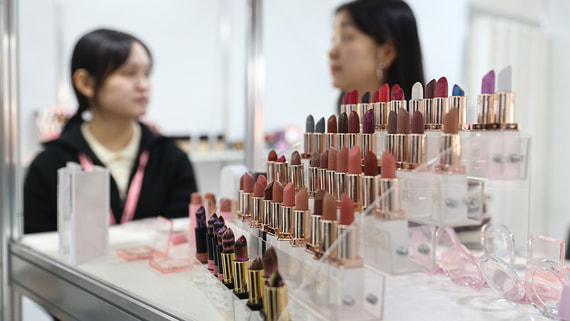
Russia has witnessed a remarkable surge in Asian cosmetics imports, with shipments from key Asian markets increasing by more than one-third compared to previous periods. This significant growth reflects a fundamental shift in the Russian beauty industry, as consumers and retailers alike pivot toward Eastern suppliers following the departure of numerous Western brands from the market. The trend is further bolstered by active government support programs in several Asian countries that provide subsidies and incentives for cosmetics exports to Russia.
The dramatic increase in Asian beauty product imports represents one of the most notable transformations in Russia’s consumer goods sector over the past two years. South Korea, China, and Japan have emerged as the primary beneficiaries of this shift, capitalizing on the vacuum left by European and American cosmetics giants that suspended operations in Russia. Industry analysts note that this realignment was not merely a matter of necessity but also reflects genuine consumer appreciation for Asian skincare philosophies and innovative formulations.
Government Support Driving Export Growth
A key factor behind the import surge lies in the strategic government support programs implemented by several Asian nations. South Korea, in particular, has leveraged its well-established K-beauty industry infrastructure to expand market share in Russia. The Korean government has provided export subsidies, reduced trade barriers, and facilitated logistics partnerships that make shipping to Russia more cost-effective. Similarly, Chinese authorities have encouraged domestic cosmetics manufacturers to explore the Russian market as part of broader economic cooperation initiatives between the two neighboring countries.
These government-backed programs include trade financing assistance, participation in Russian beauty exhibitions, and support for establishing distribution networks. Japanese cosmetics companies, known for their premium skincare lines and cutting-edge technology, have also received encouragement to fill the luxury segment gap. The combined effect of these policies has created a favorable environment for Asian beauty brands to establish long-term footholds in the Russian market, transforming what began as an emergency substitution into a potentially permanent market restructuring.
Consumer Preferences and Market Adaptation
Russian consumers have demonstrated remarkable adaptability in embracing Asian cosmetics, with many discovering that products from Korea, Japan, and China often surpass their former Western favorites in quality and innovation. The Asian beauty industry has long been recognized globally for its research-driven approach, emphasizing ingredients like snail mucin, centella asiatica, and various fermented compounds that have gained cult followings worldwide. Russian consumers, particularly in the 18-35 age demographic, had already been familiar with K-beauty trends through social media and international beauty communities before Western brands departed.
Market research indicates that Russian retailers have significantly expanded their Asian cosmetics selections, with some major chains dedicating entire sections to Korean and Japanese products. Online marketplaces have seen exponential growth in Asian beauty product listings, and specialized stores focusing exclusively on Asian cosmetics have opened in major Russian cities including Moscow, St. Petersburg, and Kazan. The price competitiveness of many Asian brands, combined with their reputation for effective formulations, has accelerated consumer adoption beyond initial expectations.
Future Outlook and Industry Implications
Industry experts predict that the Asian cosmetics trend in Russia will continue strengthening throughout 2025 and beyond, regardless of any potential return of Western brands to the market. The relationships formed between Russian distributors and Asian manufacturers, combined with established logistics channels and growing brand loyalty among consumers, suggest a permanent shift in market composition. Some analysts estimate that Asian cosmetics could capture up to 40-50 percent of the Russian beauty market within the next three to five years, compared to approximately 15-20 percent before 2022.
The implications extend beyond simple import statistics, as Russian entrepreneurs have begun exploring partnerships with Asian manufacturers for private-label production and even joint ventures. This deeper integration could eventually lead to localized manufacturing facilities, further cementing Asian influence in the Russian cosmetics industry. Meanwhile, domestic Russian cosmetics producers face both challenges and opportunities, as they must compete with well-established Asian brands while potentially learning from their innovative approaches to product development and marketing.
Expert Opinion: The surge in Asian cosmetics imports represents a structural rather than temporary shift in Russia’s beauty market. Given the sophisticated supply chains now established, strong consumer acceptance, and continued government support from exporting nations, Asian brands are positioned to maintain dominant market share even if geopolitical conditions change. Russian beauty consumers have effectively discovered a new paradigm of skincare innovation that aligns well with global trends toward ingredient-focused, technology-driven cosmetics.