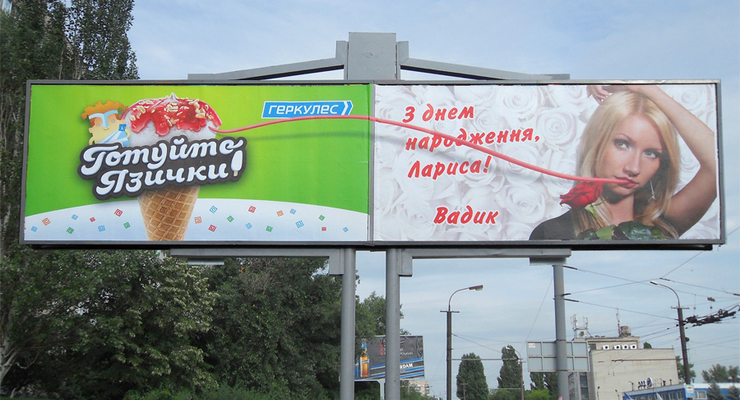
A landmark Ukrainian food industry enterprise has officially ceased to exist after a court ruling declared it bankrupt. The Hercules ice cream company, once the dominant force in Ukraine’s frozen dessert market, has been formally liquidated, marking the end of an era for one of the country’s most recognizable food brands. The company’s assets remain under occupation following Russia’s military invasion, making any potential recovery or restructuring impossible under current circumstances.
The bankruptcy declaration represents not just the end of a business entity, but the closure of a chapter in Ukrainian industrial history. Hercules had built its reputation over decades, becoming synonymous with quality ice cream for generations of Ukrainian consumers. The brand’s products were staples in grocery stores and kiosks throughout the country, and its factory operations provided employment for hundreds of workers in the region.
Rise and Fall of a Market Leader
At its peak, Hercules controlled a significant portion of Ukraine’s ice cream market, competing successfully against both domestic producers and international brands that entered the market following Ukraine’s independence in 1991. The company invested heavily in modern production equipment and quality control systems, allowing it to maintain competitive pricing while meeting increasingly stringent food safety standards. Industry analysts had long considered Hercules a model of successful post-Soviet enterprise transformation, having navigated the turbulent economic conditions of the 1990s and early 2000s.
The company’s production facilities were located in territories that fell under Russian occupation following the full-scale invasion that began in February 2022. This geographical reality sealed the company’s fate, as management lost access to manufacturing equipment, inventory, and distribution networks virtually overnight. Unlike some Ukrainian businesses that managed to relocate operations to safer regions in the country’s west, Hercules was unable to salvage its production capabilities due to the scale and fixed nature of its industrial infrastructure.
Economic Impact of Occupation on Ukrainian Industry
The Hercules bankruptcy is part of a broader pattern of economic devastation affecting Ukrainian businesses in occupied territories. According to economic research institutes, hundreds of Ukrainian enterprises have faced similar fates, with total losses to the national economy reaching billions of dollars. The food processing sector has been particularly hard hit, as many production facilities were concentrated in eastern and southern regions that have experienced the heaviest fighting and occupation.
Legal experts note that the bankruptcy proceedings for companies with assets in occupied territories present unique challenges. Courts must balance the formal requirements of commercial law with the practical impossibility of liquidating assets that remain beyond Ukrainian government control. In many cases, these proceedings serve primarily to provide legal closure for creditors and stakeholders, rather than any meaningful distribution of remaining value. The Hercules case will likely serve as precedent for similar situations involving other occupied enterprises.
Future of Ukraine’s Food Industry
Despite the losses represented by cases like Hercules, Ukraine’s food industry has shown remarkable resilience in other sectors. Producers in unoccupied regions have expanded operations to fill market gaps, and some displaced businesses have successfully reestablished themselves in new locations. International investment continues to flow into Ukrainian food processing, particularly in areas considered strategically secure. Industry associations remain optimistic about long-term recovery prospects, though they acknowledge that full restoration of pre-war production capacity will require years of reconstruction and billions in investment.
The Ukrainian government has implemented various support programs for businesses affected by the conflict, including tax relief, subsidized loans, and assistance with relocation. However, for enterprises like Hercules whose entire operational base fell under occupation, these measures arrived too late to prevent collapse. The company’s bankruptcy serves as a sobering reminder of the human and economic costs of the ongoing conflict, extending far beyond immediate casualties to encompass the destruction of livelihoods and industrial heritage built over generations.
Expert Opinion: The Hercules bankruptcy exemplifies the structural economic damage that will persist long after active hostilities cease. Rebuilding Ukraine’s food processing sector will require not just capital investment but also the restoration of supply chains, skilled workforce retention, and consumer brand trust that took decades to develop. International partners should anticipate that economic recovery assistance will need to extend well beyond traditional reconstruction timelines, potentially spanning fifteen to twenty years for full industrial capacity restoration.