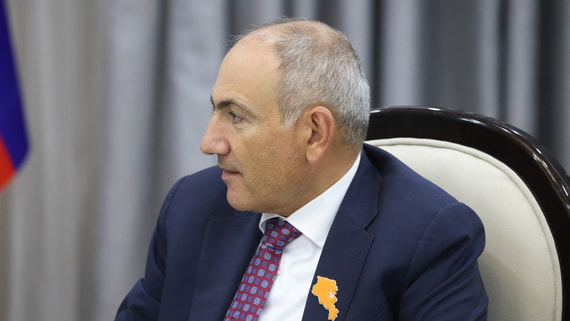
Armenian Prime Minister Nikol Pashinyan made a significant diplomatic appearance this week, attending the Eurasian Economic Union (EAEU) council meeting for the first time in approximately eighteen months. His return to the regional economic bloc’s summit comes amid ongoing tensions between Armenia and its traditional ally Russia, as well as Yerevan’s increasingly complex balancing act between Eastern and Western partnerships. The absence and subsequent return of one of the bloc’s key leaders has raised important questions about Armenia’s future commitment to the post-Soviet economic integration project.
The Eurasian Economic Union, established in 2015, represents one of Russia’s most ambitious attempts to maintain economic and political influence over former Soviet republics. The bloc currently includes Russia, Belarus, Kazakhstan, Kyrgyzstan, and Armenia, with a combined population of approximately 180 million people and a total GDP exceeding $2 trillion. Armenia joined the union in January 2015, becoming the fourth member state, a decision that was seen at the time as a significant pivot toward Moscow and away from potential European Union integration.
A History of Complicated Statements
Throughout his time in office, Pashinyan has made several notable statements regarding Armenia’s participation in the EAEU. Initially, after coming to power through the 2018 Velvet Revolution, Pashinyan affirmed Armenia’s commitment to the bloc while simultaneously expressing interest in developing closer ties with the European Union. He has repeatedly characterized Armenia’s EAEU membership as a pragmatic economic decision rather than an ideological alignment, emphasizing the importance of trade relations with Russia and other member states. Russia remains Armenia’s largest trading partner, and the EAEU framework has facilitated duty-free trade and labor mobility for hundreds of thousands of Armenian migrant workers in Russia.
However, Pashinyan’s rhetoric has shifted considerably following the 2020 Nagorno-Karabakh war and the subsequent 2023 military operation by Azerbaijan that resulted in the exodus of ethnic Armenians from the region. The Prime Minister has expressed disappointment with Russian security guarantees, particularly regarding the Collective Security Treaty Organization (CSTO), a separate military alliance that includes most EAEU members. In recent months, Pashinyan has publicly questioned whether Armenia received adequate support from its allies during critical security moments, leading to speculation about potential withdrawal from both organizations.
Economic Realities and Geopolitical Calculations
Despite political tensions, economic data reveals the complexity of Armenia’s position within the EAEU. According to recent statistics, trade between Armenia and other EAEU member states has actually increased significantly, partly due to parallel import schemes following Western sanctions on Russia. Armenian exports to Russia grew substantially in 2022 and 2023, as the country became a transit point for certain goods. This economic interdependence creates a challenging situation for Pashinian, who must balance domestic political pressures to distance Armenia from Moscow with the practical realities of economic survival. Analysts estimate that a sudden withdrawal from the EAEU could result in significant tariff increases on Armenian goods and potential disruptions to remittance flows from Armenian workers in Russia.
International observers have noted that Pashinyan’s return to the EAEU summit may signal a temporary stabilization in relations, though the underlying tensions remain unresolved. Armenia has simultaneously been pursuing closer ties with the European Union, the United States, and France, including military cooperation agreements and democratic reform programs. This multi-vector foreign policy approach represents a significant departure from Armenia’s traditional reliance on Russia as its primary security guarantor. The coming months will likely prove crucial in determining whether Armenia can successfully maintain its EAEU membership while developing Western partnerships, or whether it will be forced to make a definitive choice between competing integration projects.
Looking Ahead: Uncertain Future for Regional Integration
The broader implications of Armenia’s ambivalent stance extend beyond bilateral relations with Russia. Other EAEU member states, particularly Kazakhstan, have also shown signs of seeking greater autonomy from Moscow’s influence following the Ukraine conflict. Armenia’s experience may serve as a test case for whether smaller member states can successfully renegotiate the terms of their participation in Russian-led integration projects. As regional dynamics continue to evolve, Pashinyan’s delicate diplomatic maneuvering will remain closely watched by observers seeking to understand the future of post-Soviet cooperation structures.
Expert Opinion: Pashinyan’s return to the EAEU summit likely represents tactical pragmatism rather than a genuine reconciliation with Moscow. Armenia faces a strategic dilemma common to small states caught between major powers: the need to diversify partnerships without triggering economic retaliation. The coming two years will be decisive, as Armenia must demonstrate whether it can extract better terms from the EAEU while developing Western ties, or risk isolation from both spheres of influence.