
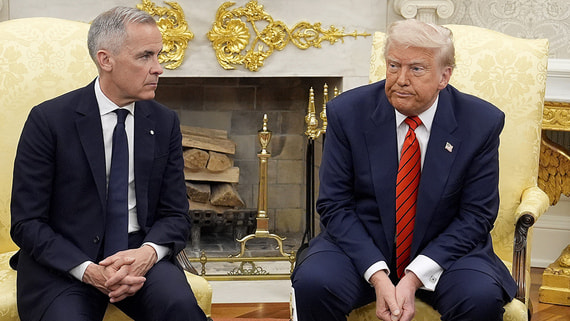
The escalating trade tensions between the United States and Canada have reached a new critical point as President Donald Trump continues to pursue aggressive tariff policies against America’s northern neighbor and closest trading partner. Despite mounting evidence that these protectionist measures are negatively impacting his approval ratings and causing economic uncertainty, Trump remains committed to his confrontational trade strategy. This latest chapter in the ongoing dispute raises fundamental questions about the motivations behind such policies and their long-term consequences for both nations.
The United States and Canada share one of the world’s largest and most integrated bilateral trading relationships, with goods and services worth approximately $900 billion crossing the border annually. The two countries have been economic partners for generations, with their economies deeply intertwined through complex supply chains, particularly in the automotive, energy, and agricultural sectors. However, Trump has consistently argued that trade deals with Canada have been unfair to American workers and businesses, a position he has held since his first presidential campaign.
Historical Context of US-Canada Trade Relations
The current trade conflict cannot be understood without examining the historical backdrop of North American trade policy. The North American Free Trade Agreement (NAFTA), implemented in 1994, created one of the world’s largest free trade zones, eliminating most tariffs between the US, Canada, and Mexico. For decades, this arrangement largely defined economic relations between the neighboring countries. During Trump’s first term, he successfully renegotiated NAFTA into the United States-Mexico-Canada Agreement (USMCA), which he touted as a major achievement. However, even this revised deal has not satisfied his demands for what he considers fair treatment of American industries.
Trade experts have long noted that Trump’s approach to international commerce differs fundamentally from traditional economic thinking. While most economists view trade as mutually beneficial, Trump has consistently framed it as a zero-sum competition where one nation’s gain is another’s loss. This perspective drives his willingness to impose tariffs even when they risk retaliation and economic disruption. Canada, for its part, has historically been reluctant to engage in trade conflicts with its larger neighbor but has shown increasing resolve in defending its economic interests against what it perceives as unjustified aggression.
Economic Impact and Political Calculations
The economic consequences of these trade policies extend far beyond diplomatic tensions. American consumers and businesses often bear the brunt of tariff costs through higher prices and supply chain disruptions. Industries that rely on Canadian raw materials, such as lumber for construction or aluminum for manufacturing, have experienced significant cost increases. Furthermore, Canadian retaliatory measures target American exports, harming farmers, manufacturers, and workers in key electoral states. Polling data suggests that a majority of Americans are concerned about the impact of trade wars on their personal finances and the broader economy.
Despite these negative economic indicators, Trump appears to view tariffs as a powerful political tool that demonstrates strength and fulfills campaign promises to his base. His supporters often interpret the aggressive trade stance as evidence that he is fighting for American workers against foreign competition. This political calculation seems to outweigh concerns about short-term economic pain or declining poll numbers. Additionally, Trump has used tariffs as leverage to extract concessions on non-trade issues, including immigration and border security, blurring the lines between economic and national security policy.
Future Outlook and Strategic Implications
Looking ahead, the trajectory of US-Canada trade relations remains uncertain but concerning. Canadian officials have indicated their willingness to negotiate while simultaneously preparing for prolonged economic confrontation. The uncertainty created by unpredictable trade policy complicates business planning and investment decisions on both sides of the border. Some analysts suggest that Trump may eventually seek a deal that allows him to claim victory, following a pattern seen in previous trade disputes. However, the depth of his commitment to protectionist principles and his willingness to sustain economic damage suggest this conflict may persist throughout his administration, fundamentally reshaping the traditionally harmonious relationship between these two allied nations.
Expert Opinion: The current US-Canada trade conflict represents a strategic gamble by the Trump administration that prioritizes political messaging over economic efficiency. While short-term disruptions are inevitable, the long-term risk lies in permanently damaging trust between two deeply integrated economies, potentially pushing Canada to diversify its trade relationships toward Europe and Asia. The ultimate outcome will depend on whether domestic political pressures in both countries force a negotiated settlement or entrench positions further.