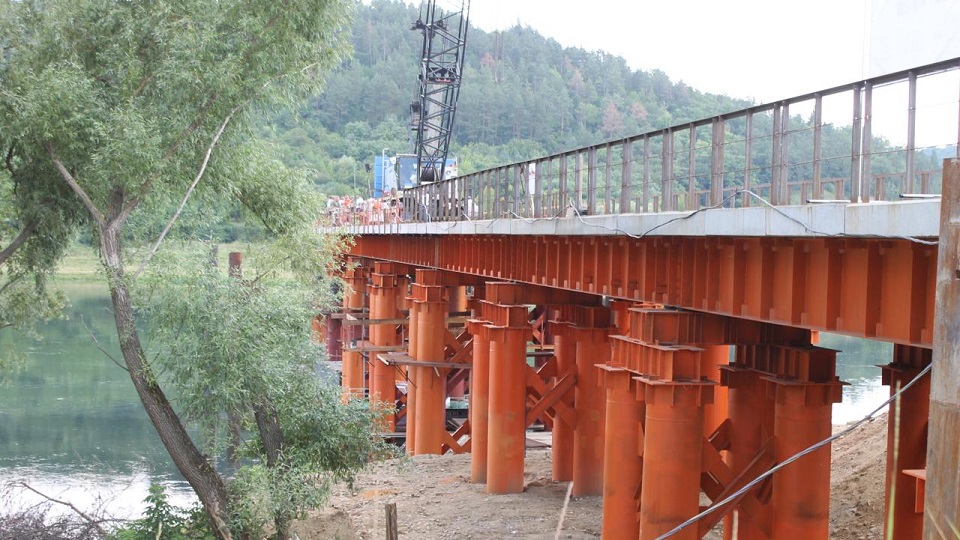
Construction has begun on a bridge crossing leading to the future international checkpoint “Yampil – Cosauti” between Ukraine and Moldova. However, contrary to earlier promises of a permanent new bridge, authorities have started building a temporary crossing structure over the Dniester River. This development has raised questions about the timeline and scope of the infrastructure project that was intended to strengthen transportation links between the two neighboring countries.
Background of the Yampil-Cosauti Border Crossing Project
The Yampil-Cosauti crossing point has long been identified as a strategic location for improving connectivity between Ukraine and Moldova. The Dniester River, which forms a natural boundary between the two nations in this region, has historically presented challenges for cross-border transportation. The river stretches approximately 1,362 kilometers from its source in the Ukrainian Carpathian Mountains to its mouth at the Black Sea, serving as a critical geographical feature that has shaped regional commerce and diplomacy for centuries.
The project to establish a new international checkpoint at this location was announced as part of broader efforts to diversify border crossing options between the two countries. Currently, several crossings exist along the Ukrainian-Moldovan border, but many suffer from outdated infrastructure and limited capacity. The addition of a modern crossing point was expected to reduce congestion at existing checkpoints and provide more efficient routes for both commercial traffic and civilian travelers. Officials from both countries had expressed optimism that a permanent bridge would significantly boost bilateral trade and strengthen economic ties in the region.
Temporary Solution Raises Questions About Project Timeline
The decision to construct a temporary crossing instead of the promised permanent bridge has sparked discussion among local residents and regional observers. Photographs from the construction site reveal a modular or prefabricated structure being assembled, rather than the foundations for a permanent concrete and steel bridge that many had anticipated. Such temporary crossings, while functional, typically have limitations in terms of weight capacity, weather resilience, and long-term durability compared to permanent infrastructure.
Temporary bridge solutions are commonly employed in situations where rapid deployment is necessary or when funding constraints prevent immediate construction of permanent structures. These crossings can serve effectively for months or even years while permanent infrastructure is planned and funded. However, they often require more frequent maintenance and may impose restrictions on the types of vehicles that can safely traverse them. The shift to a temporary solution could indicate budgetary challenges, expedited timelines to meet immediate needs, or complications in the planning process for the permanent structure.
Strategic Importance for Regional Connectivity
The strategic significance of improved border infrastructure between Ukraine and Moldova cannot be overstated, particularly in the current geopolitical context. Since 2022, Moldova has become an increasingly important partner for Ukraine, with both nations pursuing closer integration with European institutions. Enhanced border crossings facilitate not only trade but also humanitarian movements and diplomatic cooperation. The European Union has expressed support for infrastructure improvements along its eastern neighborhood borders as part of broader connectivity initiatives.
Moldova, a landlocked nation of approximately 2.6 million people, depends heavily on efficient border crossings for its international trade. Similarly, southwestern Ukraine benefits from diversified export routes and access to alternative transportation corridors. The Yampil-Cosauti crossing, once fully operational with permanent infrastructure, could handle significant volumes of agricultural products, manufactured goods, and passenger traffic. Regional economic development agencies have noted that modern border infrastructure typically generates positive spillover effects for communities on both sides of the crossing.
While the temporary crossing represents progress toward establishing the new checkpoint, stakeholders on both sides of the border will likely continue monitoring developments closely. The ultimate delivery of a permanent bridge will depend on sustained political commitment, adequate funding, and successful coordination between Ukrainian and Moldovan authorities. For now, the temporary structure will serve as a functional if imperfect solution to the longstanding need for improved connectivity across the Dniester River.
Expert Opinion: The construction of a temporary crossing rather than a permanent bridge suggests potential funding gaps or urgency to establish operational connectivity before completing full infrastructure development. This phased approach, while pragmatic, indicates that the permanent bridge project may face a timeline of several years rather than months. Both countries would benefit from securing EU infrastructure funding to ensure the eventual construction of a durable, high-capacity crossing that meets long-term regional transportation needs.