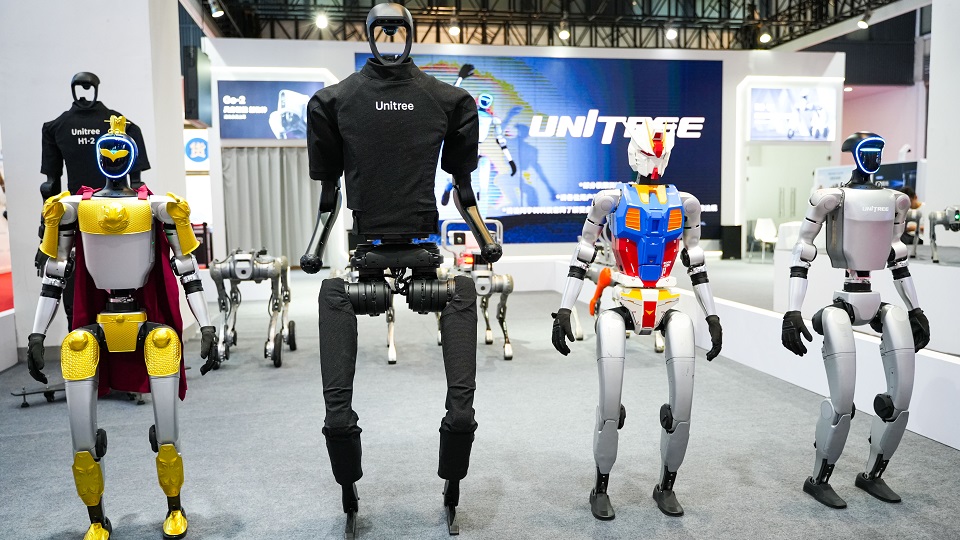
Unitree Robotics, one of China’s leading manufacturers of humanoid and quadruped robots, is reportedly preparing for an initial public offering that could value the company at approximately $9 billion. The ambitious IPO plans underscore the explosive growth in the global robotics industry and highlight China’s aggressive push to become a dominant force in advanced robotics and artificial intelligence technologies. The company has attracted significant attention from investors worldwide, with AI developer DeepSeek serving as a strategic investor in the venture.
Unitree’s Rise in the Competitive Robotics Landscape
Founded in 2016 in Hangzhou, China, Unitree Robotics has rapidly evolved from a startup focused on affordable quadruped robots to a comprehensive robotics company developing sophisticated humanoid machines. The company first gained international recognition for its robot dogs, which offered capabilities similar to Boston Dynamics’ Spot but at a fraction of the price. This aggressive pricing strategy allowed Unitree to capture significant market share in both consumer and industrial segments, establishing itself as a formidable competitor in the global robotics arena.
The company’s product lineup has expanded significantly in recent years. Unitree’s humanoid robots, including models like the H1 and G1, have demonstrated impressive capabilities in walking, running, and performing complex physical tasks. These developments have positioned the company at the forefront of the humanoid robotics revolution, a sector that many analysts believe will experience exponential growth over the coming decade as applications in manufacturing, healthcare, and service industries continue to expand.
Strategic Investment from DeepSeek and AI Integration
The involvement of DeepSeek as a strategic investor represents a crucial element of Unitree’s growth strategy. DeepSeek, which made headlines in early 2025 with its highly efficient AI models that challenged the dominance of American technology giants, brings significant artificial intelligence expertise to the partnership. The synergy between advanced AI capabilities and sophisticated robotics hardware could prove transformative, enabling Unitree’s robots to perform more complex tasks with greater autonomy and adaptability.
This collaboration reflects a broader trend in the robotics industry where the integration of large language models and advanced AI systems is becoming increasingly essential. Companies that can successfully combine cutting-edge AI with robust mechanical platforms are expected to lead the next generation of robotics innovation. The partnership also demonstrates the growing interconnection between China’s AI and robotics sectors, with technology companies increasingly collaborating to create comprehensive solutions.
Global Market Dynamics and Competition
The $9 billion valuation target places Unitree among the most valuable robotics companies globally and reflects investor confidence in the humanoid robot market’s potential. Industry analysts estimate that the global humanoid robot market could reach $38 billion by 2035, driven by applications in manufacturing, logistics, healthcare, and domestic assistance. Major technology companies including Tesla with its Optimus robot, Boston Dynamics, Figure AI, and Agility Robotics are all competing intensely in this emerging space.
Unitree’s competitive advantage lies in its ability to manufacture high-quality robots at significantly lower price points than Western competitors. The company has leveraged China’s robust manufacturing ecosystem and supply chain infrastructure to achieve economies of scale that remain difficult for competitors to match. This cost efficiency, combined with rapid technological advancement, has made Unitree an attractive investment opportunity for both domestic and international investors seeking exposure to the robotics sector.
Implications for the Future of Robotics
The potential IPO comes at a pivotal moment for the global robotics industry. Governments worldwide are investing heavily in robotics and automation technologies as they seek to address labor shortages, improve manufacturing competitiveness, and maintain technological leadership. China, in particular, has made robotics development a national priority, with substantial government support flowing to companies like Unitree through various funding programs and policy initiatives. A successful public offering would provide Unitree with the capital necessary to accelerate research and development, expand production capacity, and pursue international market expansion.
Expert Opinion: The convergence of Unitree’s IPO plans and DeepSeek’s strategic investment signals a new phase in robotics development where AI-native companies may outpace traditional manufacturing approaches. If successful, this $9 billion valuation could establish a new benchmark for robotics company valuations globally and potentially trigger a wave of similar offerings from competitors seeking to capitalize on investor enthusiasm for humanoid robots. The key factor to watch will be whether Unitree can translate its hardware cost advantages into sustainable software and AI capabilities that match or exceed Western competitors.