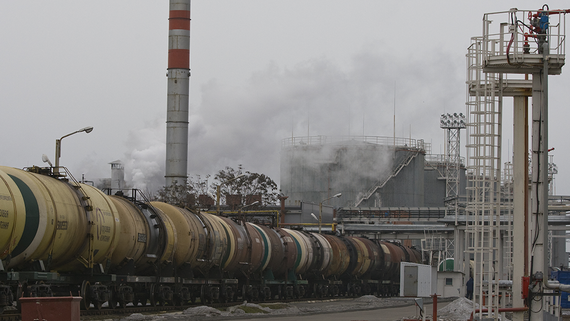

The Russian government is preparing to allocate approximately 10 billion rubles (roughly $100 million) to support railway transportation for the agricultural sector, according to sources cited by the business newspaper Vedomosti. This significant financial injection comes as shipping operations in the Sea of Azov face increasing constraints, forcing agricultural producers to seek alternative logistics routes to maintain their export capabilities and domestic supply chains.
The funding initiative represents a strategic pivot in Russia’s agricultural logistics infrastructure, acknowledging the growing challenges that have emerged in the region’s traditional maritime shipping lanes. With the Sea of Azov experiencing limited navigability, railway transportation has become an increasingly critical lifeline for moving grain, fertilizers, and other agricultural commodities to both domestic markets and export terminals.
Strategic Shift in Agricultural Logistics
The Sea of Azov, a shallow body of water connected to the Black Sea through the Kerch Strait, has historically served as a vital corridor for Russian agricultural exports. However, ongoing geopolitical tensions, infrastructure limitations, and security concerns have significantly impacted commercial shipping operations in the region. The Kerch Strait Bridge, while providing a land connection to Crimea, has also created navigational constraints for larger vessels, further complicating maritime logistics.
Russia remains one of the world’s largest grain exporters, with the agricultural sector contributing significantly to the national economy. In recent years, the country has consistently ranked among the top wheat exporters globally, shipping millions of tons annually to markets across the Middle East, North Africa, and Asia. Any disruption to these supply chains has implications not only for Russian farmers and exporters but also for global food security.
Railway Infrastructure Becomes Critical Backbone
The decision to invest heavily in railway support reflects a broader recognition that rail transport offers several advantages over maritime shipping in the current environment. Railways provide more predictable scheduling, reduced vulnerability to weather conditions and maritime security risks, and the ability to reach inland destinations that ports cannot serve directly. Russian Railways (RZD), the state-owned railway monopoly, has been working to expand capacity on key agricultural corridors, though bottlenecks remain a persistent challenge.
Industry analysts note that the 10 billion ruble allocation could help subsidize transportation costs for agricultural producers, many of whom have faced rising logistics expenses amid the shifting supply chain landscape. The funds may also support infrastructure improvements at key railway junctions and grain loading terminals, helping to increase throughput capacity and reduce transit times. Some portion of the funding is expected to facilitate the acquisition of specialized rolling stock, including grain hoppers and refrigerated cars for perishable agricultural products.
Implications for Farmers and Global Markets
For Russian agricultural producers, particularly those in southern regions traditionally dependent on Azov Sea ports, the railway support program offers a crucial alternative to maintain market access. Farmers in regions such as Krasnodar, Rostov, and Stavropol have faced significant challenges in recent seasons, with some reporting delays and increased costs in getting their products to market. The new funding mechanism could help level the playing field and ensure that geographic location does not become an insurmountable barrier to commercial viability.
The initiative also underscores the Russian government’s commitment to maintaining the country’s position in global agricultural markets despite logistical challenges. As climate patterns shift and global food demand continues to rise, Russia’s vast agricultural lands remain a strategic asset. Ensuring efficient transportation links between production regions and export points is essential for capitalizing on this potential and maintaining food security both domestically and for importing nations that depend on Russian supplies.
Expert Opinion: This substantial investment in railway infrastructure signals Russia’s long-term strategic adaptation to evolving geopolitical realities rather than a temporary measure. Analysts expect this could catalyze a permanent restructuring of agricultural logistics networks, with rail potentially capturing market share from maritime transport even after current restrictions ease. The success of this program will likely influence similar infrastructure investments across other sectors facing comparable supply chain vulnerabilities.