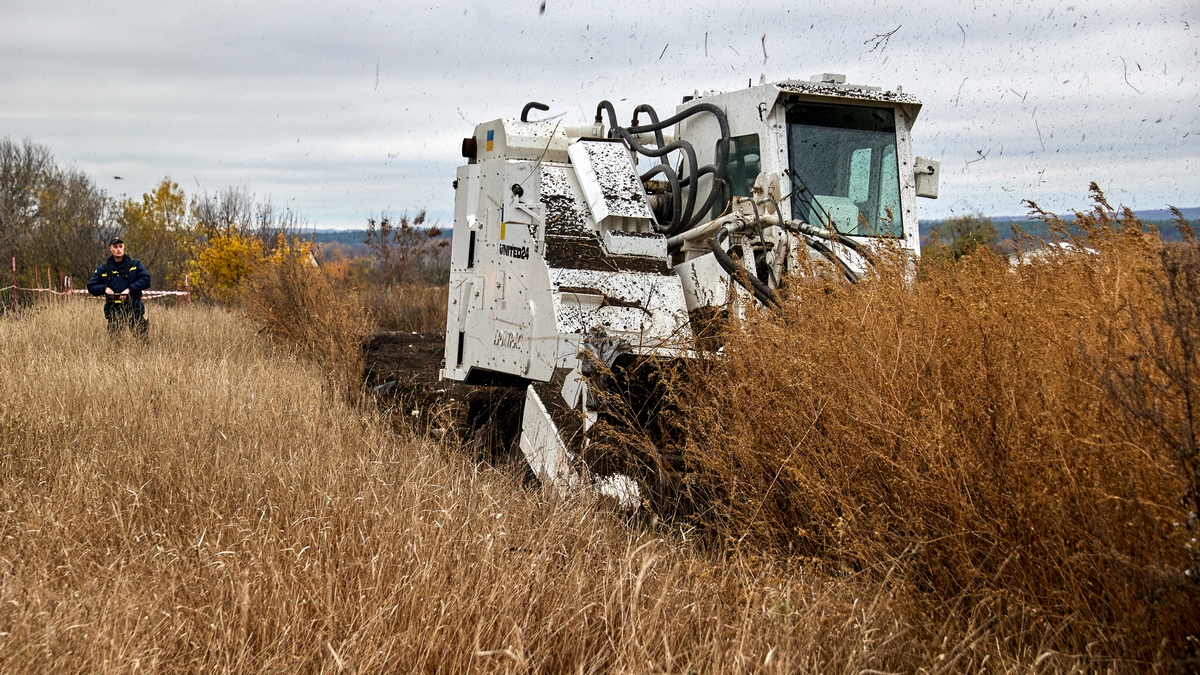
Ukrainian farmers have reaped significant economic benefits from humanitarian demining efforts, with cleared agricultural lands generating approximately 1 billion hryvnias (roughly 25 million USD) in revenue over the past year. This milestone underscores the critical importance of mine clearance operations in restoring Ukraine’s agricultural sector, which has been severely impacted by the ongoing conflict. The Ukrainian government has announced plans to allocate approximately 2 billion hryvnias for humanitarian demining operations in 2027, signaling a continued commitment to reclaiming contaminated territories for productive use.
The economic return from demined fields represents a crucial step toward agricultural recovery in a nation often referred to as the “breadbasket of Europe.” Ukraine’s fertile black soil, known as chernozem, covers approximately 25% of the world’s supply and has historically made the country one of the largest grain exporters globally. Before the conflict, Ukraine accounted for roughly 10% of global wheat exports and was a major supplier of sunflower oil, corn, and barley to international markets.
The Scale of Contamination and Clearance Challenges
The contamination of Ukrainian agricultural lands represents one of the largest demining challenges in modern history. According to various estimates, between 30 to 40 percent of Ukrainian territory may be contaminated with landmines, unexploded ordnance, and other explosive remnants of war. This encompasses millions of hectares of farmland that remain inaccessible or dangerous for cultivation. The State Emergency Service of Ukraine, along with international partners and specialized NGOs, has been working tirelessly to clear these areas, employing both traditional manual demining techniques and increasingly sophisticated technological solutions including drones, ground-penetrating radar, and specially trained detection dogs.
The process of humanitarian demining is both dangerous and time-consuming. Trained specialists must carefully survey suspected areas, identify explosive devices, and safely dispose of them before land can be certified as clear for agricultural use. On average, clearing one square kilometer of heavily contaminated land can take months and cost hundreds of thousands of dollars, making the economic returns from returned farmland essential for justifying continued investment in clearance operations.
Economic Impact and Future Investment Plans
The planned allocation of 2 billion hryvnias for demining in 2027 represents a significant increase in government funding for clearance operations. This investment is expected to accelerate the pace of land restoration and enable more farmers to return to their fields safely. International organizations including the United Nations, the HALO Trust, Danish Demining Group, and various governmental aid programs have been providing substantial support to Ukrainian demining efforts, contributing both funding and technical expertise. The World Bank has estimated that complete clearance of Ukraine’s contaminated territories could take decades and require billions of dollars in sustained investment.
Agricultural economists emphasize that the return on investment from demining extends far beyond immediate crop revenues. Restored farmland contributes to food security, provides employment in rural communities, generates export revenue, and helps stabilize local economies that have been devastated by conflict. Each hectare returned to production represents not only immediate income but long-term agricultural capacity that will benefit Ukraine for generations to come. The success of the past year’s demining efforts provides compelling evidence that sustained investment in clearance operations delivers tangible economic benefits while reducing the humanitarian toll of explosive remnants of war.
Expert Opinion: The nearly 1 billion hryvnia return from demined agricultural lands in a single year demonstrates a powerful economic case for accelerated demining investment. As international funding mechanisms mature and clearance technologies improve, Ukraine could potentially restore significant portions of its agricultural capacity within the next decade, though full clearance will likely extend beyond 2040. The doubling of planned government funding for 2027 suggests policymakers recognize demining as both a humanitarian imperative and a strategic economic investment essential for Ukraine’s post-conflict recovery.