
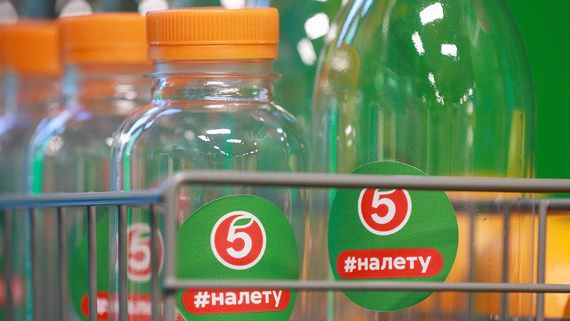
Russian retail giant X5 Group has officially shuttered its sole experimental ‘Pyaterochka On-the-Go’ convenience store in Saint Petersburg, marking another setback in the company’s efforts to introduce innovative retail formats to the Russian market. The closure highlights the significant challenges facing retailers attempting to adapt Western-style grab-and-go concepts to local consumer habits and economic conditions. Company representatives acknowledged that developing this particular retail format in Russia has proven exceptionally difficult, citing a combination of factors that made the business model unsustainable in its current form.
The ‘Pyaterochka On-the-Go’ concept was designed as a compact, high-turnover convenience store targeting busy urban consumers seeking quick purchases without the need to navigate larger supermarket formats. Similar to convenience store models popular in major Asian and Western cities, the format emphasized speed, accessibility, and a curated selection of ready-to-eat meals, beverages, and essential everyday items. The Saint Petersburg location served as a testing ground for X5 Group’s ambitions to diversify beyond its traditional supermarket and hypermarket offerings.
Challenges in the Russian Convenience Store Market
The decision to close the experimental store reflects broader difficulties facing the quick-service retail sector in Russia. Unlike markets such as Japan, South Korea, and the United Kingdom, where convenience stores have become deeply embedded in daily consumer routines, Russian shopping habits remain oriented toward larger-format stores where customers can complete comprehensive shopping trips. The premium pricing typically associated with convenience formats also presents obstacles in a market where price sensitivity remains high among consumers. Additionally, the infrastructure required to maintain fresh, ready-to-eat products demands significant investment in supply chain logistics and cold storage capabilities.
Industry analysts point to several structural factors limiting convenience store growth in Russia. The prevalence of traditional ‘produkty’ shops and kiosks already serves the quick-purchase market segment, while larger discount retailers continue to dominate with aggressive pricing strategies. The economic pressures of recent years, including inflation and currency fluctuations, have made consumers increasingly focused on value, reducing appetite for the convenience premium that makes express formats profitable elsewhere.
X5 Group’s Broader Strategy and Market Position
X5 Group remains Russia’s largest food retailer by revenue, operating thousands of stores under various banners including Pyaterochka, Perekrestok, and Chizhik. The company has historically demonstrated willingness to experiment with new formats, though not all initiatives have achieved lasting success. The closure of the On-the-Go store does not signal a retreat from innovation but rather a recalibration of resources toward formats with proven profitability. The company continues to invest heavily in digital services, delivery infrastructure, and its discount Chizhik chain, which has shown strong growth in the current economic environment.
The Russian grocery retail landscape has undergone significant transformation in recent years, with consolidation accelerating as major players expand their market share. Competition remains fierce, with companies like Magnit, Lenta, and regional chains vying for consumer loyalty. E-commerce grocery services have also grown substantially, particularly following behavioral shifts during the pandemic years, presenting both opportunities and challenges for traditional brick-and-mortar retailers seeking new growth avenues.
Future Outlook for Express Retail in Russia
Despite this setback, industry observers suggest that the convenience store format may eventually find its footing in Russian cities as consumer lifestyles continue evolving and urbanization intensifies. Younger demographics increasingly value time-saving solutions, and workplace commuting patterns in major metropolitan areas could eventually support more grab-and-go retail locations. However, successful implementation will likely require adapted business models that account for local market conditions, potentially involving hybrid formats that combine elements of traditional stores with express conveniences. For now, X5 Group appears content to focus on strengthening its core operations while monitoring market conditions for future opportunities in innovative retail concepts.
Expert Opinion: The closure of Pyaterochka On-the-Go underscores a fundamental tension in Russian retail between Western convenience concepts and local shopping culture. While express formats may eventually gain traction as urban lifestyles accelerate, retailers must develop uniquely Russian approaches rather than transplanting foreign models directly. X5 Group’s willingness to experiment and learn from such initiatives positions them well for future format innovations once market conditions become more favorable.