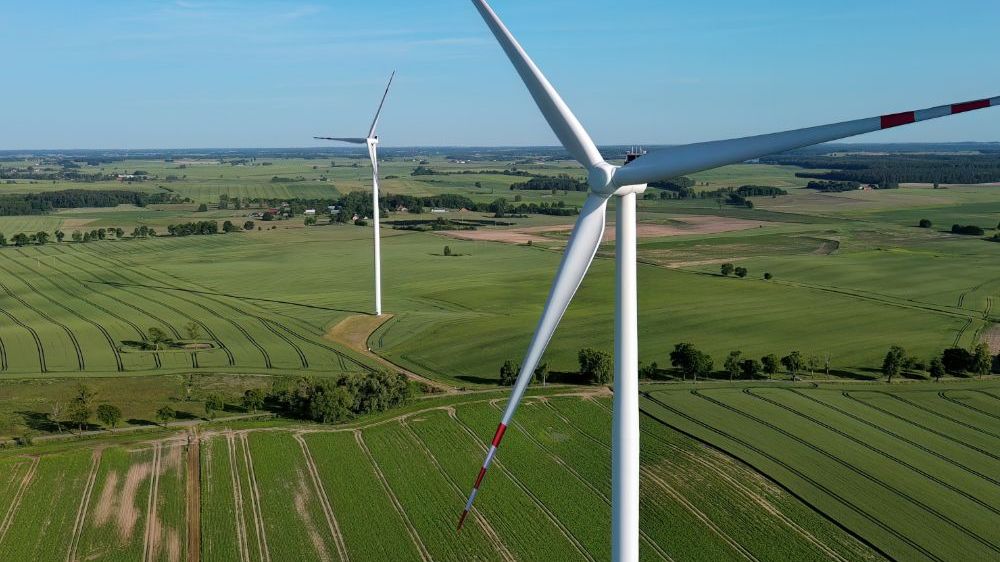
A major Polish energy infrastructure company, Grupa Mosty, has announced ambitious plans to construct what would become Ukraine’s largest wind power station in the Odesa region. The proposed facility would feature between 130 and 150 wind turbines, representing a massive investment in renewable energy infrastructure despite the ongoing conflict in the country. This development signals growing international confidence in Ukraine’s energy future and marks a significant step forward in the nation’s green energy transition.
The announcement comes at a critical time for Ukraine’s energy sector, which has faced unprecedented challenges since Russia’s full-scale invasion began in February 2022. Russian forces have systematically targeted Ukrainian energy infrastructure, destroying numerous power plants, substations, and transmission lines. The construction of new renewable energy facilities represents not only an economic opportunity but also a strategic necessity for Ukraine’s energy independence and security.
Strategic Importance of the Odesa Region Project
The Odesa region has been identified as an optimal location for wind energy development due to its favorable geographical conditions. Located along the Black Sea coast, the area benefits from consistent wind patterns that can generate electricity throughout much of the year. Wind energy experts note that coastal regions typically offer wind speeds averaging between 6 to 8 meters per second, which is ideal for modern wind turbine operations. The proposed 130-150 turbine installation would have an estimated capacity of several hundred megawatts, potentially powering hundreds of thousands of Ukrainian homes.
Grupa Mosty, headquartered in Poland, has established itself as a significant player in European energy infrastructure. The company specializes in constructing power transmission systems, substations, and renewable energy facilities across Central and Eastern Europe. Their interest in the Ukrainian market reflects broader European Union efforts to support Ukraine’s reconstruction while simultaneously advancing continental clean energy goals. Poland, as Ukraine’s immediate western neighbor and a key ally, has been at the forefront of providing economic and infrastructure support throughout the conflict.
Ukraine’s Renewable Energy Ambitions
Before the war, Ukraine had been making significant strides in renewable energy development. By 2021, the country had installed approximately 8 gigawatts of renewable energy capacity, with wind and solar power leading the expansion. However, the conflict has both damaged existing facilities and accelerated interest in distributed and resilient energy sources. International investors have shown increasing willingness to participate in Ukraine’s energy reconstruction, viewing it as both a humanitarian contribution and a long-term business opportunity in a country that will eventually require massive infrastructure rebuilding.
The European Union has committed to supporting Ukraine’s green energy transition as part of the broader reconstruction framework. The European Bank for Reconstruction and Development and other international financial institutions have signaled readiness to fund renewable energy projects in Ukraine, provided security conditions allow for construction and operation. Wind power is particularly attractive because modern turbines can be manufactured and assembled relatively quickly, and dispersed wind farms are more resilient to attacks than centralized thermal power plants.
Challenges and Future Outlook
Despite the optimistic announcements, the project faces considerable challenges. Security concerns remain paramount, as Russian forces continue to target Ukrainian infrastructure. The Odesa region, while not on the front lines, has experienced missile and drone attacks throughout the conflict. Insurance costs for construction projects in Ukraine have skyrocketed, and supply chain logistics remain complicated due to ongoing hostilities. Nevertheless, energy analysts suggest that projects announced now position companies advantageously for the post-conflict reconstruction period.
The potential construction of Ukraine’s largest wind farm represents a vote of confidence in the country’s future stability and economic recovery. If completed, the facility would significantly boost Ukraine’s renewable energy capacity and reduce dependence on fossil fuels and energy imports. It would also create hundreds of construction and maintenance jobs in the Odesa region, contributing to local economic development. As European nations continue to diversify away from Russian energy sources, Ukraine’s renewable energy sector could become an important component of regional energy security.
Expert Opinion: This project exemplifies the emerging trend of strategic infrastructure investment in conflict-affected regions, where international companies position themselves for post-war reconstruction opportunities. If Grupa Mosty successfully navigates the current security challenges, this wind farm could serve as a model for future renewable energy development in Ukraine, potentially attracting additional European investors and accelerating the country’s integration into EU energy markets.