Syria stands at a critical crossroads as the International Monetary Fund has projected the possibility of double-digit GDP growth for the war-ravaged nation under its new leadership. Ahmed al-Sharaa, formerly known as Abu Mohammad al-Julani, has emerged as the de facto leader following the dramatic collapse of Bashar al-Assad’s regime in December 2024. The ambitious economic forecasts have sparked intense debate among economists and regional analysts about whether such growth is genuinely achievable or merely a statistical illusion created by measuring from rock bottom.
The IMF’s optimistic projections are largely predicated on what economists call the “low base effect.” After more than thirteen years of devastating civil war, Syria’s economy has contracted by an estimated 85% from its pre-war levels. In 2010, before the conflict erupted, Syria’s GDP stood at approximately $60 billion. By 2023, that figure had plummeted to less than $9 billion according to various estimates. When measuring growth from such a catastrophically low starting point, even modest absolute gains can translate into impressive percentage increases. This statistical phenomenon, while technically accurate, can mask the enormous challenges that lie ahead for genuine economic reconstruction.
The Devastating Economic Legacy of Civil War
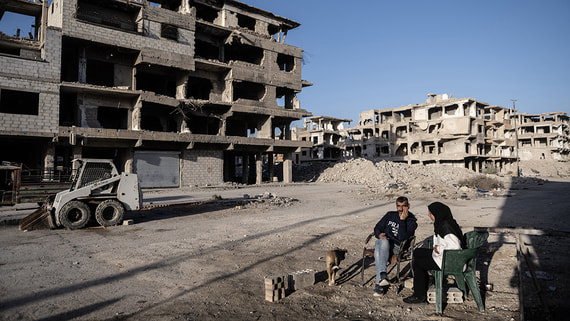
The scale of destruction Syria has endured is almost incomprehensible. The World Bank estimated total damage to physical infrastructure at over $400 billion by 2020, a figure that has only grown in subsequent years. Entire cities like Aleppo, Homs, and parts of Damascus have been reduced to rubble. Critical infrastructure including power plants, water treatment facilities, hospitals, and transportation networks require complete reconstruction. The United Nations estimates that approximately 90% of Syrians live below the poverty line, with food insecurity affecting millions. The Syrian pound has lost more than 99% of its pre-war value, and hyperinflation has made daily survival a constant struggle for ordinary citizens.
Beyond physical destruction, Syria faces a severe human capital crisis. An estimated 6.8 million Syrians remain displaced internally, while another 6.5 million have fled abroad as refugees. Many of those who left were educated professionals, entrepreneurs, and skilled workers whose expertise would be essential for reconstruction. Rebuilding this human capital will take a generation, regardless of how quickly physical infrastructure can be restored. Universities, research institutions, and technical training centers have been devastated, creating a knowledge gap that will hamper economic development for decades.
International Sanctions and Investment Challenges
One of the most significant obstacles to Syria’s economic recovery remains the complex web of international sanctions. The United States, European Union, and other Western nations imposed comprehensive sanctions during the Assad era, targeting everything from oil exports to banking transactions. While some governments have signaled willingness to reconsider these measures under new leadership, the process of sanctions relief is notoriously slow and politically complicated. Al-Sharaa’s government must demonstrate sustained commitment to human rights, inclusive governance, and counterterrorism cooperation before significant sanctions relief becomes politically viable in Western capitals.
Foreign direct investment, crucial for any meaningful reconstruction effort, remains hesitant. International investors require stability, rule of law, and predictable regulatory frameworks—none of which currently exist in Syria. The country’s banking system is virtually non-functional, property rights are contested after years of displacement and confiscation, and corruption remains endemic. Gulf states, particularly Saudi Arabia and the UAE, have shown interest in participating in reconstruction, but their commitments remain conditional on political developments. China and Russia, traditional Assad allies, have their own economic constraints and strategic calculations that may limit their investment appetite.
Structural Reforms and Governance Questions
For Syria to achieve sustainable growth rather than mere statistical recovery, fundamental structural reforms will be necessary. The new government must establish transparent institutions, combat corruption, create a functioning legal system, and develop regulatory frameworks that encourage private enterprise. Al-Sharaa’s background as a former jihadist commander raises questions among Western observers about his commitment to inclusive governance and economic liberalization, though his recent rhetoric has emphasized pragmatism and reconciliation. The transformation from armed rebellion to effective state administration represents an enormous challenge that few insurgent movements have successfully navigated.
Agricultural rehabilitation offers perhaps the most immediate pathway to economic improvement. Before the war, agriculture employed approximately 17% of Syria’s workforce and contributed significantly to food security. Restoring irrigation systems, providing seeds and equipment, and reconnecting farmers to markets could generate relatively quick returns. Similarly, Syria’s oil and gas sector, though modest by regional standards, could provide crucial revenue if production facilities are repaired and sanctions permit exports. These sectors require less sophisticated infrastructure than manufacturing or services, making them logical starting points for reconstruction.
Regional Dynamics and Future Prospects
Syria’s economic future is inextricably linked to regional geopolitics. Relations with neighboring Turkey, which controls significant border crossings and hosts millions of Syrian refugees, will be crucial. Lebanon’s economic collapse has eliminated what was once an important trading partner. Iraq remains unstable, and Jordan faces its own economic challenges. The normalization of relations with Gulf monarchies could unlock significant reconstruction funding, but this requires navigating complex political conditions. Israel’s recent military operations in Syrian territory add another layer of uncertainty to the security environment essential for economic recovery.
Ultimately, while double-digit GDP growth is mathematically possible given Syria’s devastated starting point, such figures would represent recovery rather than genuine development. Returning to pre-war economic output could take decades under the most optimistic scenarios. The more relevant question is whether al-Sharaa’s government can create conditions for sustainable, inclusive growth that improves ordinary Syrians’ lives rather than merely benefiting connected elites. History suggests that post-conflict economic transitions are extraordinarily difficult, with success stories being the exception rather than the rule.
Expert Opinion: Syria’s path to economic recovery will likely follow a pattern of initial rapid statistical growth followed by a prolonged period of slower, more challenging development. The IMF’s double-digit projections, while technically achievable, should be viewed as a temporary phenomenon driven by the low base effect rather than evidence of genuine economic transformation. The critical period will come in years three through five, when the easy gains from basic reconstruction give way to the harder work of institutional development, human capital rebuilding, and integration into regional and global markets.