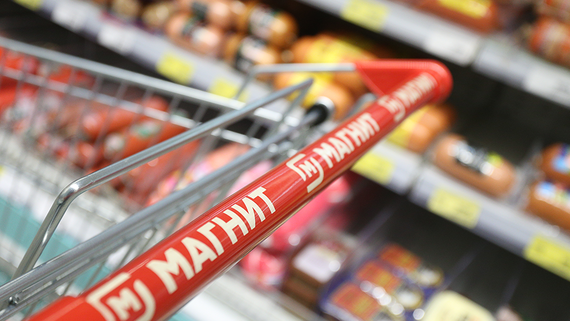
Russia’s largest food retailer Magnit is facing a critical crossroads with its marketplace venture, Magnit Market. The company’s leadership has acknowledged that the current business model has proven unsuccessful in competing against the dominant players in the Russian e-commerce sector. This admission marks a significant turning point for one of the country’s most ambitious attempts by a traditional retailer to break into the rapidly growing online marketplace segment, raising questions about the future of hybrid retail strategies in an increasingly competitive digital landscape.
Key Takeaways
- Magnit admits its marketplace model failed to compete with Wildberries, Ozon, and Yandex Market despite 29,000+ store network backing
- Russian e-commerce leaders invested billions in logistics infrastructure over a decade, creating nearly insurmountable barriers for newcomers
- Company may pivot to quick commerce and 15-30 minute grocery delivery, leveraging existing urban store footprint as competitive advantage
- Industry experts suggest partnerships with established marketplaces may become the template for traditional retailers seeking digital relevance
Magnit Struggles Against Entrenched E-Commerce Giants
The Russian e-commerce market has become increasingly dominated by a handful of powerful players, with Wildberries, Ozon, and Yandex Market controlling the vast majority of online retail transactions. These platforms have invested billions of rubles in logistics infrastructure, technology development, and seller acquisition programs over the past decade, creating formidable barriers to entry for newcomers. Magnit Market, despite the backing of Russia’s largest grocery chain with over 29,000 stores nationwide, has struggled to carve out a meaningful market share against these entrenched competitors. The marketplace model requires massive scale to achieve profitability, as operators typically work on razor-thin margins while investing heavily in fulfillment centers, delivery networks, and customer acquisition.
Industry analysts have long questioned whether traditional retailers could successfully transition into marketplace operators without the technological DNA and venture capital backing that propelled pure-play e-commerce companies to dominance. The economics of running a marketplace fundamentally differ from operating physical retail stores, requiring different skill sets, investment horizons, and tolerance for losses during the growth phase. Magnit’s experience appears to validate these concerns, as the company discovered that brand recognition and existing retail infrastructure alone cannot guarantee success in the fiercely competitive online space.
From Pandemic-Driven Growth to Market Consolidation
| Factor | Market Leaders (Wildberries, Ozon, Yandex) | Magnit Market |
|---|---|---|
| Infrastructure | Hundreds of fulfillment centers, tens of thousands of pickup points | Leverages 29,000+ retail stores |
| Investment Timeline | Decade of sustained technology and logistics investment | Recent market entrant |
| Core Competency | Digital-native platforms with venture backing | Traditional food retail operations |
| Profitability Path | 5-7 years to marketplace profitability | Struggling with marketplace economics |
Magnit launched its marketplace initiative as part of a broader digital transformation strategy aimed at capturing the growing consumer preference for online shopping. The COVID-19 pandemic accelerated e-commerce adoption across Russia, with online retail sales growing by double digits annually between 2020 and 2024. Traditional retailers watched nervously as their customers increasingly shifted purchasing habits toward digital platforms, prompting many to develop their own online capabilities. However, building a successful marketplace requires more than simply creating a website and mobile application; it demands sophisticated algorithms for product discovery, robust seller management systems, and logistics networks capable of delivering millions of packages daily.
The company’s acknowledgment of its marketplace struggles comes at a time when consolidation in the Russian e-commerce sector appears inevitable. Smaller platforms have found it increasingly difficult to compete with the marketing budgets and delivery speeds offered by market leaders. Wildberries alone operates hundreds of fulfillment centers and tens of thousands of pickup points across Russia, a network that took years and massive investments to build. For Magnit, the question now becomes whether to continue investing in a standalone marketplace model, pivot toward a different digital strategy, or potentially seek partnerships with existing platforms.
Pivoting Toward Grocery Delivery and Quick Commerce
Despite the setbacks with Magnit Market, the company is unlikely to abandon its digital aspirations entirely. Instead, industry observers expect a strategic pivot that leverages Magnit’s core strengths in food retail and its extensive physical store network. One potential direction involves focusing on grocery delivery and quick commerce, where the company’s existing infrastructure provides natural advantages over pure-play e-commerce competitors. The rapid delivery segment, promising deliveries within 15-30 minutes, has shown strong growth in major Russian cities and aligns well with Magnit’s urban store footprint. Another possibility includes transforming the marketplace into a more specialized platform focused on food-adjacent categories rather than attempting to compete across all product segments.
The broader lesson from Magnit Market’s struggles extends beyond a single company’s fortunes. It illustrates the fundamental challenge facing traditional retailers worldwide as they attempt to compete with digital-native platforms. Success in e-commerce increasingly requires not just financial resources but also organizational agility, technological expertise, and willingness to sustain losses while building scale. As Russia’s retail landscape continues to evolve, the fate of Magnit Market will serve as a case study for other traditional retailers contemplating similar digital transformation journeys.
What This Means for Hybrid Retail Strategies
Magnit’s marketplace difficulties expose a fundamental tension in retail transformation: physical store expertise does not translate directly into e-commerce success. The company discovered that brand recognition and existing infrastructure cannot compensate for the technological sophistication and logistics scale that pure-play platforms spent years building. This validates long-standing analyst skepticism about traditional retailers becoming credible marketplace operators.
The timing proves particularly challenging as Russian e-commerce consolidation accelerates. Smaller platforms are being squeezed by the marketing budgets and delivery speeds of dominant players. For Magnit, continuing independent marketplace investment looks increasingly unviable, pushing the company toward strategic alternatives that play to its actual strengths.
Quick commerce emerges as the most logical pivot. Magnit’s dense urban store network provides genuine competitive advantage for 15-30 minute delivery services, a segment showing strong growth in major Russian cities. Rather than competing head-to-head across all product categories, focusing on food and food-adjacent items leverages existing supply chain relationships and perishable goods expertise that digital-native platforms cannot easily replicate.
Frequently Asked Questions
Why did Magnit Market fail despite backing from Russia's largest grocery chain?
Marketplace success requires sustained investment over 5-7 years, sophisticated technology for product discovery, and massive logistics networks. Magnit’s physical retail expertise and store count couldn’t overcome the decade-long head start that Wildberries, Ozon, and Yandex Market had in building digital infrastructure and seller ecosystems.
What is quick commerce and why might it work better for Magnit?
Quick commerce promises delivery within 15-30 minutes, primarily for groceries and everyday essentials. Magnit’s 29,000+ urban stores can serve as micro-fulfillment centers, providing a natural advantage over e-commerce competitors who would need to build similar physical networks from scratch.
Could Magnit partner with existing Russian marketplaces instead?
Industry experts suggest this may become the preferred model, with traditional retailers exchanging physical store networks and retail expertise for equity stakes in digital platforms, avoiding the massive capital requirements of independent marketplace development.
Expert Opinion: The marketplace model requires sustained investment over 5-7 years before reaching profitability, a timeline that traditional retailers with quarterly earnings pressures often cannot accommodate. Magnit’s most viable path forward likely involves strategic partnership with an established marketplace rather than independent operation, potentially exchanging its physical retail expertise and store network for equity stake in a digital platform. This hybrid approach may become the template for traditional retailers seeking digital relevance without the massive capital requirements of building marketplace infrastructure from scratch.