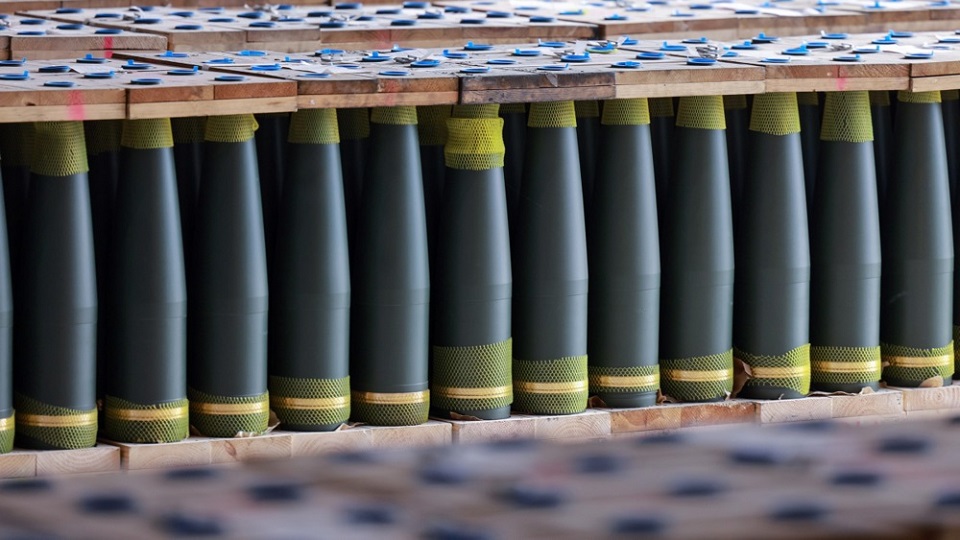
A shocking revelation from a Pentagon audit has exposed that a Texas manufacturing facility, built with a staggering $469 million investment, has failed to produce even one component for artillery shells. The plant was specifically constructed to help replenish America’s depleted stockpiles of 155mm artillery ammunition following extensive shipments to Ukraine as part of ongoing military aid packages. This failure represents a significant setback in the United States’ efforts to rebuild its critical munitions reserves while continuing to support its allies abroad.
The Critical Need for Ammunition Production
The 155mm artillery shell has become the backbone of modern conventional warfare, particularly evident in the ongoing conflict in Ukraine. Since Russia’s full-scale invasion began in February 2022, the United States has provided Ukraine with over two million 155mm rounds, significantly depleting American stockpiles that were already considered insufficient for a potential large-scale conflict. Military analysts have repeatedly warned that the U.S. industrial base was not prepared to sustain high-intensity ammunition production, a concern that dates back decades to the post-Cold War drawdown of defense manufacturing capabilities.
The Texas facility was part of a broader Pentagon initiative to dramatically increase artillery shell production from approximately 14,000 rounds per month to over 100,000 rounds monthly by 2025. This ambitious goal was set in response to the unprecedented consumption rates witnessed in Ukraine, where Ukrainian forces have reportedly fired thousands of shells daily during intense combat operations. The failure of this key production facility now casts serious doubt on whether these targets can be achieved within the projected timeframe.
Audit Findings and Accountability Questions
The Pentagon audit uncovered systemic failures in the project’s execution, raising serious questions about oversight and contractor accountability. According to the findings, despite receiving nearly half a billion dollars in federal funding, the facility has not progressed beyond initial setup phases and has completely missed its production milestones. The audit details point to a combination of factors including supply chain disruptions, workforce training challenges, and potential mismanagement of resources. Defense procurement experts have noted that such failures are not unprecedented in the complex world of military industrial projects, but the timing and scale of this particular shortfall make it especially concerning.
Congressional oversight committees are expected to launch their own investigations into the matter, with several lawmakers already expressing outrage over the apparent waste of taxpayer money during a critical period for national defense. The facility’s contractor faces potential penalties and contract modifications, though the immediate priority remains getting the production line operational. Historical parallels can be drawn to other troubled defense projects, such as various shipbuilding programs that experienced significant delays and cost overruns, though few have demonstrated such a complete failure to deliver any product whatsoever.
Implications for U.S. Defense Strategy and Allied Support
The ramifications of this production failure extend far beyond the immediate financial loss. America’s ability to simultaneously support Ukraine while maintaining its own military readiness has been a central concern for defense planners since the conflict began. The United States maintains strategic ammunition reserves intended for potential conflicts in multiple theaters, including the Indo-Pacific region where tensions with China continue to escalate. Every shell sent to Ukraine without adequate replacement production further strains these critical reserves, potentially limiting American options in future contingencies.
Furthermore, NATO allies who depend on American ammunition supplies are watching developments closely. Several European nations have faced similar challenges in scaling up their own production capabilities, and many had hoped American industrial capacity would help fill the gap. The Pentagon has stated it remains committed to meeting its production goals and is exploring alternative manufacturing partnerships and facilities. However, defense industry analysts caution that building new production capacity for complex munitions requires years of preparation, specialized equipment, and trained personnel that cannot be quickly assembled regardless of funding levels.
Expert Opinion: This audit reveals a fundamental vulnerability in America’s defense industrial base that decades of post-Cold War neglect have created. The inability to rapidly scale munitions production suggests the U.S. military-industrial complex remains configured for peacetime efficiency rather than wartime surge capacity. Unless structural reforms are implemented quickly, the United States may find itself unable to sustain prolonged military operations or adequately support allies in future conflicts, fundamentally undermining its global strategic position.