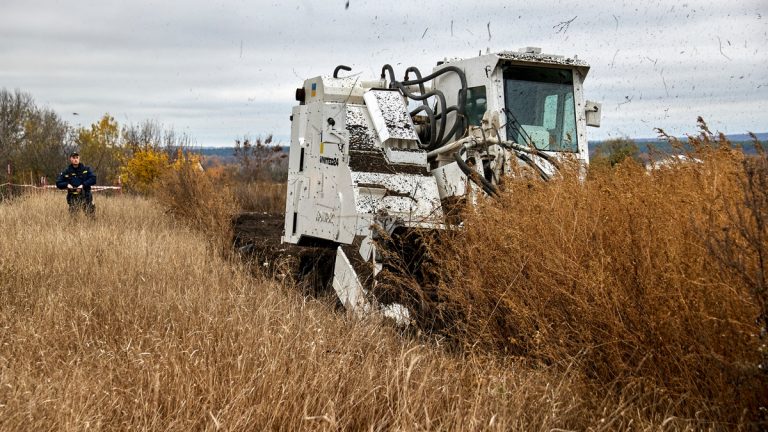
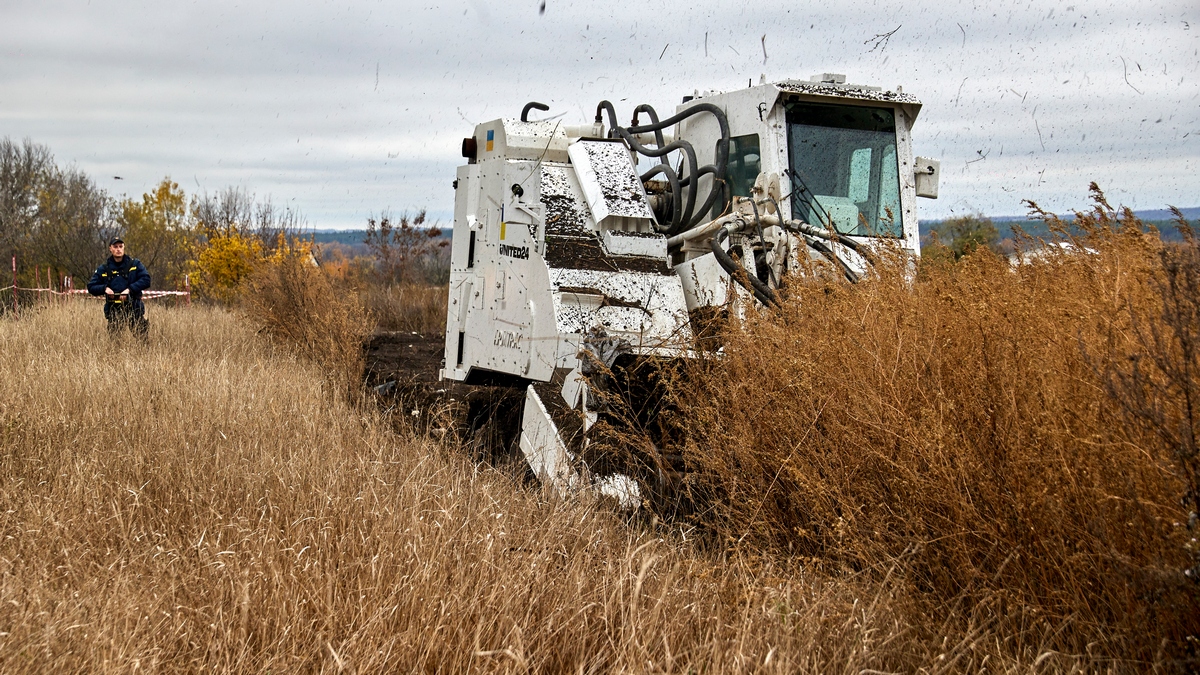
Despite the Ukrainian government offering fully subsidized demining services for agricultural lands, a significant underground market for illegal mine clearance has emerged across the country. This parallel economy has developed as desperate farmers seek faster solutions to return their fields to production, creating a dangerous and unregulated industry that operates outside official oversight. The phenomenon highlights the enormous scale of Ukraine’s landmine contamination problem and the inadequacy of current state resources to address it in a timely manner.
Ukraine now holds the grim distinction of being one of the most heavily mined countries in the world. Since the full-scale Russian invasion began in February 2022, vast swaths of agricultural land have become contaminated with unexploded ordnance, anti-personnel mines, and anti-tank mines. According to various estimates, approximately 30 percent of Ukrainian territory may require some form of demining assessment or clearance. For a nation that was once known as the “breadbasket of Europe,” this contamination poses an existential threat to its agricultural sector and food security.
The Economics Behind Illegal Demining
The emergence of the shadow demining market can be traced to a fundamental mismatch between supply and demand. While the Ukrainian government has committed to fully funding official demining operations, the queue for these services stretches for years in many regions. Farmers facing financial pressure cannot afford to wait that long. Each growing season represents potential income lost, loan payments missed, and livelihoods destroyed. In this context, illegal demining services have found a ready market among agricultural producers willing to take significant risks to resume farming operations.
Unofficial demining operators typically charge substantially lower rates than the actual cost of professional clearance operations. These underground services often employ former military personnel, amateur sappers, or individuals with limited training who use improvised equipment and methods. The quality of their work varies dramatically, and there are no guarantees that cleared land is actually safe. Tragically, numerous accidents involving both illegal deminers and farmers who believed their land was safe have already been reported across Ukraine.
Official Demining Capacity and International Support
The Ukrainian State Emergency Service and certified demining organizations face an overwhelming task. Experts estimate that complete clearance of all contaminated territories could take decades using current resources and methodologies. International partners, including the United Nations Mine Action Service, the HALO Trust, and various national governments, have provided substantial support for demining efforts. However, even with this assistance, the pace of official clearance cannot match the urgency felt by farmers whose survival depends on working their land.
The challenge is compounded by the ongoing nature of the conflict. Unlike post-war demining operations in other countries, Ukrainian sappers must work in areas that may continue to receive new contamination from ongoing military activity. Additionally, the types of munitions used in this conflict present unique challenges. Cluster munitions, which scatter numerous small bomblets across wide areas, are particularly difficult and time-consuming to clear safely. The presence of sophisticated modern weapons alongside Soviet-era ordnance creates a complex and dangerous working environment.
Risks and Consequences of the Shadow Market
The illegal demining industry poses serious risks beyond the immediate danger to those performing the work. Land that has been unofficially cleared may still contain explosive hazards that could detonate when disturbed by agricultural machinery or even by people walking across fields. Without proper documentation and certification, there is no way to verify the thoroughness of clearance operations. Families may unknowingly be exposed to lethal dangers, and the legal and insurance implications for farmers using illegally cleared land remain murky.
Ukrainian authorities face a difficult dilemma in addressing this problem. Strict enforcement against illegal demining could leave farmers without any options, potentially driving rural populations into poverty or forcing them to abandon their land entirely. Yet allowing the shadow market to flourish creates unacceptable safety risks and undermines confidence in official demining certification processes. Some experts have called for creative solutions, including expedited training and certification programs for additional deminers, simplified procedures for agricultural land assessment, and enhanced financial support mechanisms to help farmers survive while waiting for official clearance.
Expert Opinion: The emergence of Ukraine’s shadow demining market represents a predictable consequence of insufficient state capacity meeting urgent economic necessity. International donors and Ukrainian authorities must dramatically accelerate both funding and training programs if they hope to eliminate the conditions driving farmers toward these dangerous alternatives. Without a tenfold increase in certified demining capacity over the next five years, this parallel industry will continue to grow, with inevitable tragic consequences.