
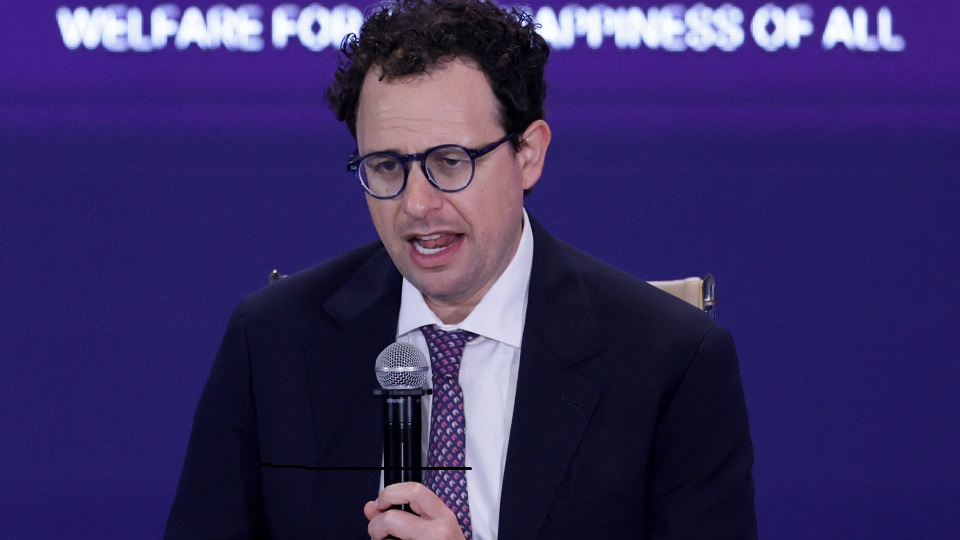
Dario Amodei, the chief executive officer of artificial intelligence company Anthropic, has made a significant personal contribution of $1 million to a political action committee dedicated to supporting candidates who advocate for more stringent AI regulations. This notable donation highlights the growing divide within the tech industry regarding how artificial intelligence should be governed and controlled as the technology rapidly advances and becomes increasingly integrated into everyday life.
The contribution represents a rare instance of a major AI company leader actively funding efforts to impose tighter restrictions on the very industry they operate in. Amodei’s decision to support regulatory efforts stands in contrast to many of his Silicon Valley peers, who have historically lobbied against government oversight of emerging technologies. The move has sparked considerable discussion about corporate responsibility and the ethical obligations of those developing powerful AI systems.
Background on Anthropic and Its Safety-First Philosophy
Anthropic was founded in 2021 by Dario Amodei and his sister Daniela Amodei, along with several other former OpenAI researchers who left the company citing concerns about AI safety practices. The San Francisco-based startup has positioned itself as a safety-focused AI research company, developing its Claude AI assistant with what it describes as constitutional AI principles designed to make the system more helpful, harmless, and honest. The company has raised billions of dollars in funding from major investors including Google and Spark Capital, reaching a valuation of approximately $18 billion.
The Amodei siblings have consistently emphasized the potential existential risks posed by advanced AI systems, advocating for what they call “responsible scaling” policies. This philosophy suggests that as AI capabilities increase, so too should the safety measures and external oversight governing these systems. Dario Amodei has been particularly vocal about the need for government involvement in AI regulation, arguing that voluntary industry self-regulation is insufficient to address the magnitude of potential risks.
The Growing Debate Over AI Regulation in Washington
The donation comes at a critical time when lawmakers in Washington are grappling with how to approach AI regulation. The Biden administration has taken initial steps through executive orders requiring AI companies to share safety test results with the government, while various congressional committees have held hearings exploring potential legislative frameworks. However, comprehensive federal AI legislation has yet to materialize, with debates ongoing about the appropriate balance between innovation and safety.
Various approaches to AI governance have emerged globally, with the European Union taking the lead through its AI Act, which establishes a risk-based regulatory framework. China has also implemented specific regulations targeting generative AI and algorithmic recommendation systems. In contrast, the United States has largely relied on voluntary commitments from AI companies, though pressure is mounting for more formal oversight. Industry groups remain divided, with some advocating for light-touch regulation to preserve American competitiveness, while others, like Amodei, argue that stronger guardrails are essential.
Industry Reactions and Implications for the Future
Amodei’s contribution has generated mixed reactions across the technology sector. Some industry observers have praised the donation as a principled stance that prioritizes long-term safety over short-term business interests. Critics, however, have questioned whether such contributions represent genuine concern or strategic positioning, noting that established AI companies might benefit from regulations that create barriers to entry for smaller competitors. The debate reflects broader tensions within the AI community about the pace of development and the adequacy of current safety measures.
As artificial intelligence continues to advance at a remarkable pace, with capabilities expanding into areas such as scientific research, healthcare diagnostics, and autonomous systems, the stakes of the regulatory debate continue to rise. Experts predict that the coming years will be decisive in establishing the frameworks that will govern AI development for decades to come. Amodei’s donation, regardless of its ultimate impact, signals that at least some industry leaders recognize the importance of external oversight and are willing to put significant resources behind that conviction. The contribution may encourage other tech executives to consider their own positions on regulation and potentially catalyze further engagement between industry and policymakers.
Expert Opinion: This donation signals a potential shift in how AI industry leaders approach regulation, moving from resistance to active participation in shaping policy frameworks. As AI capabilities accelerate, we may see more executives recognize that proactive engagement with regulators serves both public safety and long-term business sustainability. The key question remains whether such contributions will translate into meaningful legislation or become another lobbying tool in the ongoing battle to control the narrative around AI governance.