
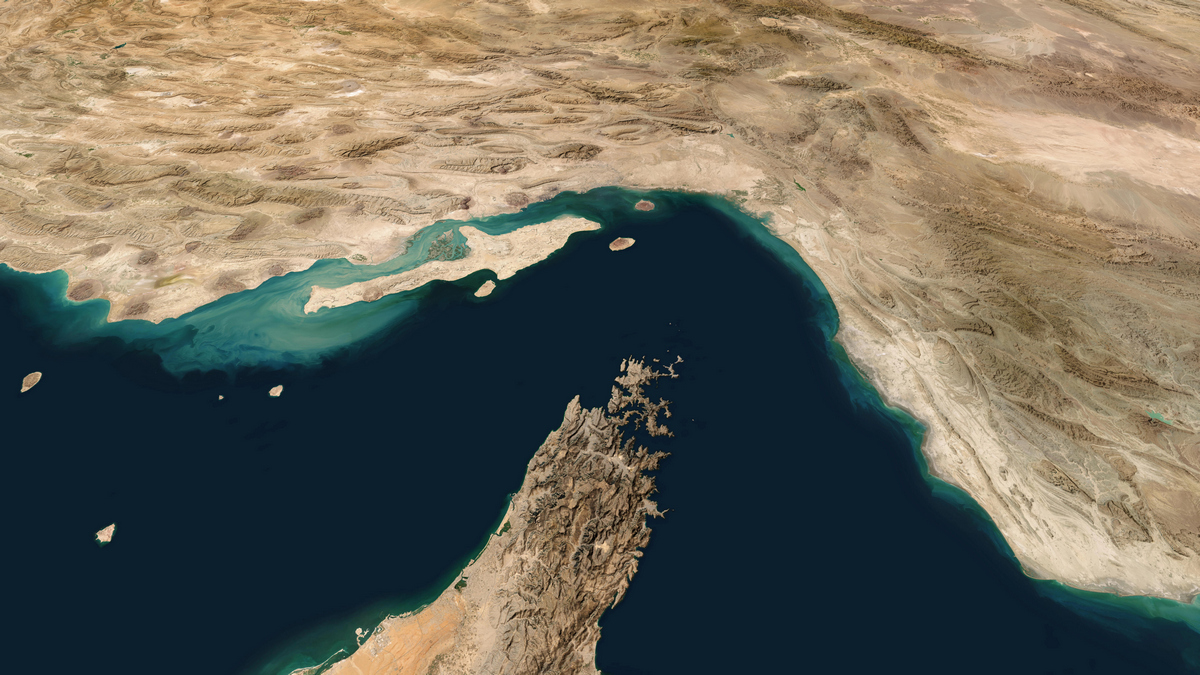
The United States Treasury Department has taken decisive action against Iranian entities accused of running an extortion scheme targeting commercial vessels navigating through one of the world’s most critical maritime chokepoints. The new sanctions prohibit commercial ships from making payments to Iran in exchange for safe passage out of the Persian Gulf, a practice that Washington characterizes as little more than organized maritime extortion operating under the guise of security services.
The measures represent the latest escalation in the ongoing economic pressure campaign against Tehran and highlight the strategic vulnerability of global shipping in the narrow waterway that handles approximately one-fifth of the world’s daily oil consumption. American officials have long accused Iran of leveraging its geographic position to intimidate and extract payments from international shipping companies seeking to avoid harassment or potential seizure of their vessels.
The Strategic Importance of the Strait of Hormuz
The Strait of Hormuz, situated between Iran and Oman, represents one of the most strategically significant maritime passages on Earth. At its narrowest point, the strait measures only 21 miles wide, with shipping lanes that accommodate the transit of roughly 20 million barrels of oil daily. This geographic bottleneck has made the waterway a focal point of regional tensions for decades, with Iran repeatedly threatening to close the strait in response to international pressure over its nuclear program and other geopolitical disputes.
For commercial shipping companies, the strait presents unique challenges. Vessels must navigate through waters where Iranian Revolutionary Guard Corps naval forces maintain a constant presence, often conducting aggressive patrol operations that critics describe as intimidation tactics. Reports have circulated for years about informal arrangements whereby shipping companies pay fees to Iranian-linked entities to ensure their vessels pass through without incident, a practice that effectively amounts to protection money.
Background of U.S.-Iran Maritime Tensions
The sanctions announcement comes against a backdrop of heightened U.S.-Iran tensions that have intensified significantly since the United States withdrew from the Iran nuclear deal in 2018. Since then, the Persian Gulf region has witnessed numerous incidents involving commercial shipping, including alleged Iranian attacks on tankers, drone strikes, and the seizure of vessels by Iranian forces. In 2019 alone, Iran seized multiple tankers, including British-flagged vessels, leading to a brief but serious escalation in regional tensions.
Maritime security experts have long warned that Iran’s ability to threaten shipping in the strait gives Tehran significant leverage in any confrontation with Western powers. The country’s Revolutionary Guard Corps operates a fleet of fast attack boats capable of swarming larger commercial vessels, while its missile batteries positioned along the coastline can target ships throughout the waterway. This military capability, combined with the economic importance of uninterrupted oil flows, creates a complex security environment that shipping companies must navigate carefully.
Implications for Global Trade and Energy Markets
The Treasury Department’s action raises important questions about the practical implications for commercial shipping operations in the region. Companies that have previously made payments to Iranian entities for safe passage now face potential secondary sanctions from the United States if they continue such arrangements. This places shipping operators in a difficult position, caught between the immediate physical security concerns of transiting the strait and the financial risks of running afoul of American sanctions.
Energy market analysts suggest that any significant disruption to shipping through the Strait of Hormuz could have immediate and substantial effects on global oil prices. While alternative routes exist, including pipelines that bypass the strait, these alternatives lack the capacity to fully compensate for any prolonged closure of the waterway. The sanctions therefore represent not only a diplomatic tool against Iran but also a calculated risk regarding potential impacts on global energy security and market stability.
Expert Opinion: The Treasury Department’s sanctions targeting Iran’s maritime protection schemes signal Washington’s determination to undermine Tehran’s revenue streams while exposing the vulnerability of critical global shipping lanes to state-sponsored extortion. However, without increased naval presence or multilateral enforcement mechanisms, shipping companies may face impossible choices between compliance with U.S. sanctions and operational security in hostile waters. This development could accelerate discussions about establishing permanent international naval task forces to ensure freedom of navigation through the strait.