
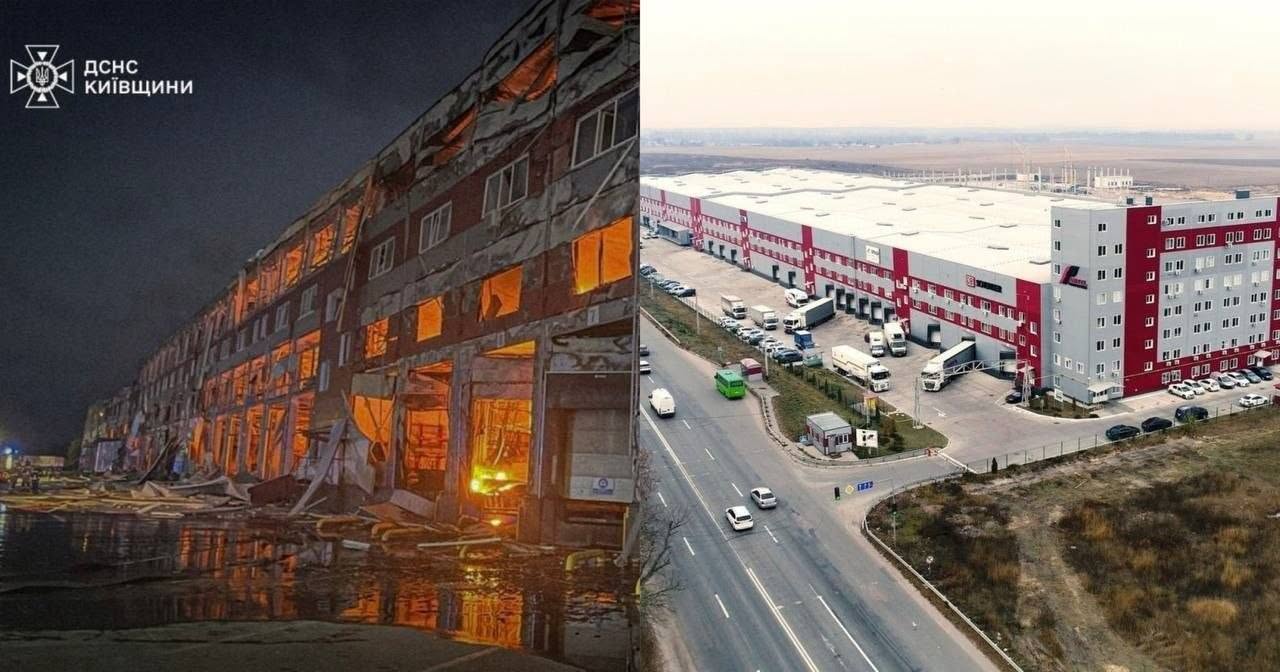
A major logistics hub located in the Kyiv region has been completely destroyed following a military strike, dealing a significant blow to Ukraine’s commercial infrastructure. The Amtel warehouse complex, spanning an impressive 100,000 square meters, served as a critical distribution center for numerous international logistics operators and commercial enterprises before its destruction. The attack highlights the ongoing vulnerability of civilian infrastructure as the conflict in Ukraine continues into its third year.
The Amtel complex represented one of the largest modern warehouse facilities in the greater Kyiv metropolitan area, functioning as a vital node in Ukraine’s supply chain network. International companies had established operations at the site, utilizing its strategic location near the capital to facilitate the distribution of goods throughout the country and across European markets. The facility featured state-of-the-art storage systems, loading docks, and transportation connections that made it an attractive hub for multinational logistics providers.
Strategic Importance of Logistics Infrastructure
The destruction of such a substantial logistics facility carries significant economic implications beyond the immediate property damage. Warehouse complexes of this scale typically employ hundreds of workers directly, while supporting thousands of additional jobs in related transportation, packaging, and distribution services. The loss of 100,000 square meters of storage capacity creates immediate challenges for businesses that relied on the facility to maintain inventory levels and fulfill customer orders across Ukraine and neighboring countries.
Logistics infrastructure has emerged as a critical factor in Ukraine’s ability to maintain economic activity during wartime conditions. The country’s warehouse and distribution network plays an essential role in ensuring that civilian populations have access to essential goods, from food products to medical supplies. International humanitarian organizations have also utilized commercial logistics facilities to stage and distribute aid materials, making the protection of such infrastructure a matter of both economic and humanitarian concern.
Pattern of Infrastructure Targeting
The attack on the Amtel complex follows a documented pattern of strikes targeting Ukrainian infrastructure throughout the ongoing conflict. Military analysts have noted that logistics centers, energy facilities, and transportation hubs have faced repeated attacks, reflecting their strategic value in sustaining both civilian life and defensive capabilities. The systematic targeting of such facilities has forced businesses to adopt dispersed storage strategies and relocate operations to areas perceived as lower-risk zones.
The Ukrainian government has repeatedly called on international partners to provide enhanced air defense systems to protect critical infrastructure from missile and drone attacks. Despite significant deliveries of defensive equipment, the vast geographic area requiring protection and the volume of incoming threats have made comprehensive defense coverage challenging to achieve. Economic experts estimate that infrastructure damage has cost Ukraine tens of billions of dollars since the conflict’s escalation in February 2022.
Economic Impact and Recovery Challenges
Rebuilding destroyed logistics infrastructure presents substantial challenges in the current environment. Construction materials remain expensive and difficult to source, while the ongoing security situation complicates planning for long-term investments. Insurance companies have largely withdrawn coverage for war-related risks, leaving property owners to absorb losses directly or seek government compensation programs that often face funding constraints and administrative delays.
International logistics companies operating in Ukraine have been forced to continuously reassess their risk exposure and operational strategies. Some firms have relocated operations to western Ukraine, where the security situation has generally been more stable, while others have reduced their presence in the country altogether. The destruction of facilities like the Amtel complex accelerates this trend, potentially creating lasting changes in how international commerce flows through the region even after the conflict eventually concludes.
Expert Opinion: The systematic destruction of large-scale logistics infrastructure represents a deliberate strategy to undermine Ukraine’s economic resilience and complicate post-war reconstruction efforts. Industry analysts project that rebuilding Ukraine’s warehouse and distribution capacity will require investments exceeding $15 billion over the next decade, with international financing and security guarantees being essential prerequisites for attracting private capital back to the sector.