Far Cry Games in Order: Every Main Game and What Connects Them
Every Far Cry game in release order, from Crytek's 2004 original to Far Cry 6, plus the spin-offs and the loose threads that link the series.
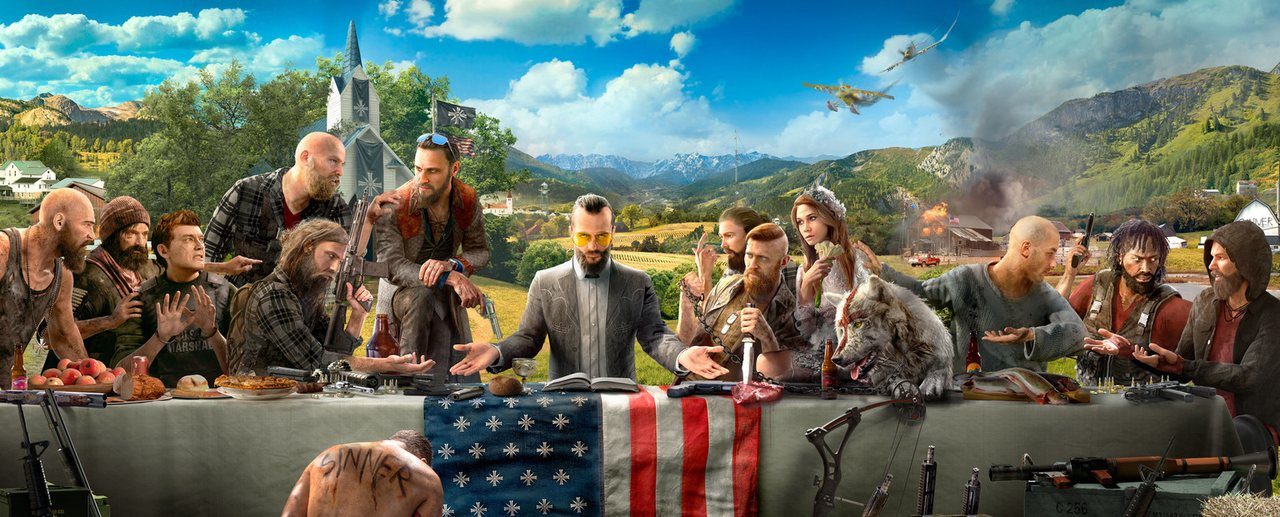
Far Cry is an unusual series to put “in order.” Unlike most long-running franchises, it has no single protagonist and very little continuous story. Each numbered game drops a new character into a new, mostly fictional location — a tropical archipelago, an African civil war, a Himalayan kingdom, rural Montana, a Caribbean island — and asks you to survive and fight back using whatever the open world provides. What connects the games is a shared design toolkit, a handful of recurring side characters, and one direct sequel relationship.
This guide lists every main game and the major spin-offs, explains how the series moved from Crytek to Ubisoft, and points out the links between entries so you can decide where to start.
Every main Far Cry game in release order
| Game | Release | Developer | Setting | Protagonist |
|---|---|---|---|---|
| Far Cry | March 2004 (PC) | Crytek | Micronesian islands | Jack Carver |
| Far Cry 2 | October 2008 | Ubisoft Montreal | Fictional Central African state | A chosen mercenary |
| Far Cry 3 | Late November/December 2012 | Ubisoft Montreal | The Rook Islands | Jason Brody |
| Far Cry 4 | November 2014 | Ubisoft Montreal | Kyrat, a fictional Himalayan country | Ajay Ghale |
| Far Cry 5 | March 27, 2018 | Ubisoft Montreal, Ubisoft Toronto | Hope County, Montana | An unnamed junior deputy |
| Far Cry 6 | October 7, 2021 | Ubisoft Toronto | Yara, a fictional Caribbean island | Dani Rojas |
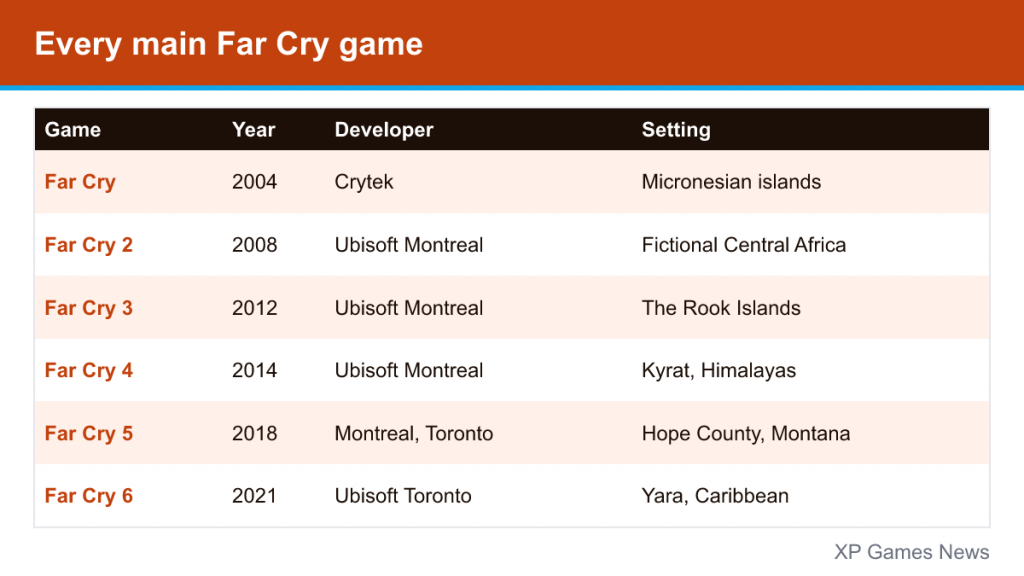
As of mid-2026, Ubisoft has not formally announced a numbered successor to Far Cry 6. There have been press reports about projects in development, but until Ubisoft shows a game officially, Far Cry 6 remains the latest main entry.
The spin-offs and standalone games
Ubisoft has released several standalone games that reuse a numbered entry’s engine and systems with a new premise. They are worth knowing because some of them are among the most beloved games in the series.
| Game | Release | What it is |
|---|---|---|
| Far Cry Instincts | 2005 (Xbox) | A console reimagining of the first game’s story and island |
| Far Cry Vengeance | 2006 (Wii) | A console follow-up in the Instincts line |
| Far Cry 3: Blood Dragon | May 2013 | A neon, 1980s action-movie parody built on Far Cry 3 |
| Far Cry Primal | February/March 2016 | Stone Age survival in the Oros valley, with tamed beasts instead of guns |
| Far Cry New Dawn | February 15, 2019 | A post-apocalyptic direct sequel to Far Cry 5 |
Blood Dragon in particular is a cult favorite: a short, self-aware game with laser weapons, cyborg protagonist Sergeant Rex “Power” Colt and a synthwave soundtrack. A remastered version was later included in Far Cry 6’s season pass.
From Crytek to Ubisoft: how the series changed hands
The first Far Cry began as a technology showcase. German studio Crytek demonstrated its CryEngine with a tech demo called X-Isle: Dinosaur Island around 1999–2000, and Ubisoft agreed to publish a full game built from it. The result, released in March 2004 for PC, was a shooter famous for its long draw distances, lush tropical vegetation and the freedom to approach enemy camps from almost any angle across large outdoor levels.
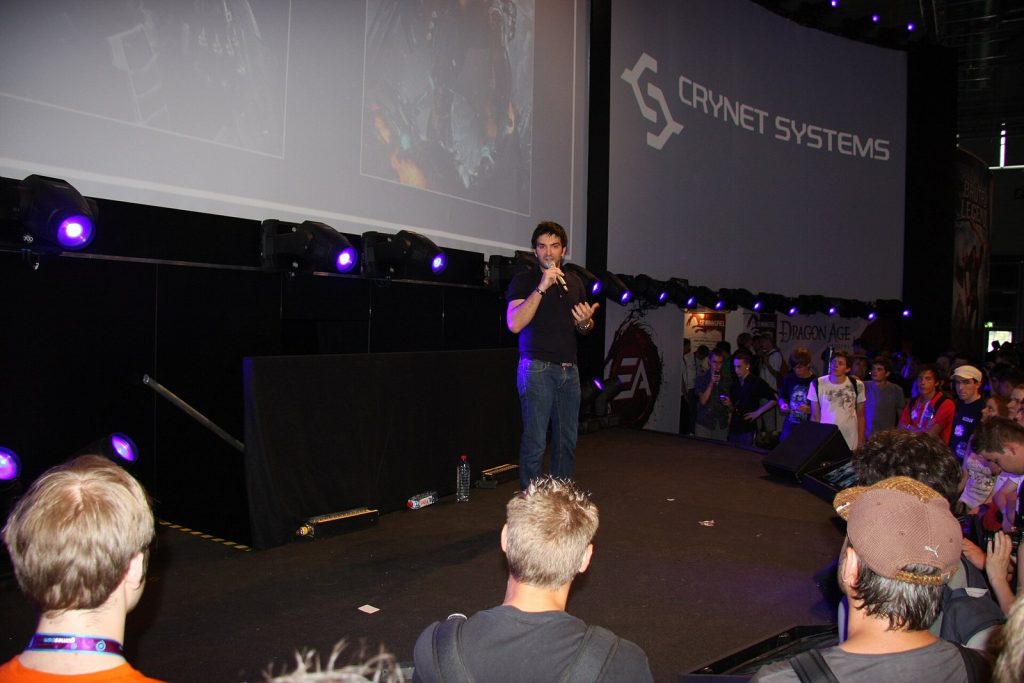
Crytek then signed with Electronic Arts for what became the Crysis series, and Ubisoft Montreal handled console versions of Far Cry. In 2006, Ubisoft acquired all rights to the Far Cry brand. That is why every numbered entry from Far Cry 2 onward was developed by Ubisoft’s own studios, and why Far Cry and Crysis share a certain DNA despite belonging to different publishers.
The first Far Cry is also more linear than later entries. It is structured as a sequence of large levels rather than one continuous open world, and its story — Jack Carver discovering a mad scientist’s genetic experiments on the islands — leans into science-fiction horror in its second half. It has little to do with the games that followed beyond the setting and the name.
What each numbered game brought to the formula
Far Cry 2 (2008)
Ubisoft’s first entry abandoned the tropics for an African civil war and a target: an arms dealer known as the Jackal. It is the series’ most austere game, with weapons that degrade and jam, a protagonist who suffers from malaria and needs medication, fire that spreads realistically through dry grass, and a map you read on a physical hand-held sheet. Its harshness divided players, but its systemic ideas — especially fire — influenced everything after it.
Far Cry 3 (2012)
Far Cry 3 defined the “modern” Far Cry. Jason Brody, a tourist whose friends are kidnapped by pirates, transforms into a warrior across the Rook Islands. It introduced radio towers that reveal the map, enemy outposts that can be liberated (ideally without raising the alarm), hunting and crafting, and a skill system represented by Jason’s tattoos. Its antagonist, Vaas Montenegro, became the template for the series’ charismatic villains.
Far Cry 4 (2014)
Ajay Ghale returns to his mother’s homeland of Kyrat to scatter her ashes and is drawn into a civil war against the self-styled king Pagan Min. Kyrat added vertical terrain, a grappling hook, a buzzer gyrocopter, elephants as rideable mounts and a choice between two rebel leaders that shapes how the story concludes.
Far Cry 5 (2018)
The first entry set in the United States. A sheriff’s deputy joins an attempt to arrest Joseph Seed, leader of a doomsday cult called Eden’s Gate, and is forced into a war across Hope County, Montana. Far Cry 5 removed the radio towers: you discover places through exploration, conversation and road signs. Progress is tracked by a “resistance” meter in each region, and Guns for Hire and animal Fangs for Hire companions fight alongside you.
Far Cry 6 (2021)
Dani Rojas joins a guerrilla movement against Antón Castillo, the dictator of the Caribbean island Yara. Notable changes include a third-person view in camps and cutscenes, improvised “Resolver” weapons, and backpack-mounted special abilities called Supremos. Its post-launch DLC episodes let you play as earlier villains — Vaas, Pagan Min and Joseph Seed — in surreal, roguelike-style stories set inside their minds.
All of these games share the systems discussed in our open-world genre explainer: a large map, main missions mixed with optional activities, and systemic encounters where predators, fire, vehicles and enemy patrols collide unpredictably.
What actually connects the games
Because each game has a new hero and setting, the links are loose — but they exist.
Far Cry 5 and New Dawn
This is the only true story sequence. New Dawn takes place 17 years after one of Far Cry 5’s endings, in a Hope County reshaped by nuclear catastrophe. Several characters return, older and changed, and the antagonists are a pair of raider twins, Mickey and Lou. If you want to play New Dawn, finish Far Cry 5 first; New Dawn assumes you know how its predecessor ended.
Hurk and other recurring characters
Hurk Drubman Jr., a loud, good-natured mercenary, debuted in Far Cry 3’s Monkey Business missions and returned in Far Cry 4, Far Cry 5 and New Dawn, while a Stone Age character called Urki in Primal is a deliberate nod to him. Willis Huntley, a CIA agent, appears in Far Cry 3 and Far Cry 4. These cameos are running jokes and Easter eggs rather than plot threads.
The villain DLC in Far Cry 6
Far Cry 6’s three villain episodes — starring Vaas, Pagan Min and Joseph Seed — are the closest the series comes to tying its numbered games together. They are psychological explorations of each antagonist rather than canonical continuations, and they are most rewarding if you have played the original games.
Shared themes
Almost every main Far Cry story is about an outsider pulled into a conflict against a charismatic tyrant, and about how violence changes the protagonist. Far Cry 3 explores this most directly with Jason’s transformation; Far Cry 4 questions whether the rebels are any better than the king; Far Cry 5 confronts the player with the cult’s apocalyptic prophecy.
Where should you start?
Because the stories are independent, start with whichever setting appeals to you. That said, some entries suit newcomers better than others:
- Far Cry 3 is the classic entry point. It has the series’ most famous villain, and every later game builds on its structure.
- Far Cry 5 is the most approachable modern entry, with friendly companions, varied regions and less map-tower busywork. Play it before New Dawn.
- Far Cry 6 is the most feature-rich if you want the latest mechanics and a long campaign.
- Far Cry 2 suits players who want something tougher and more atmospheric, and who enjoy systems that push back.
- Far Cry Primal is a good pick if you want something different — no firearms, a constructed language and tamed predators.
- Blood Dragon is short and funny, and works as a palate cleanser between longer games.
The first Far Cry is mostly of historical interest today. Its 2004 design is enjoyable, but it is harder to recommend as a starting point than the Ubisoft-era games.
Suggested play orders
Release order
Far Cry, Far Cry 2, Far Cry 3, Blood Dragon, Far Cry 4, Primal, Far Cry 5, New Dawn, Far Cry 6. This lets you see how the formula evolved, from Far Cry 2’s harsh realism to Far Cry 3’s outposts and towers to Far Cry 5’s tower-free exploration.
Story-relevant order
Only two rules matter: play Far Cry 5 before New Dawn, and play Far Cry 3, 4 and 5 before Far Cry 6’s villain DLC if you want those episodes to land.
The short route
Far Cry 3, then Far Cry 5, then New Dawn. That covers the series’ most iconic villain, its best-known modern setting and its only direct sequel in three games. Fans who like comparing long-running franchises can see a very different approach to continuity in our Assassin’s Creed order guide, where the historical timeline matters far more than in Far Cry.